




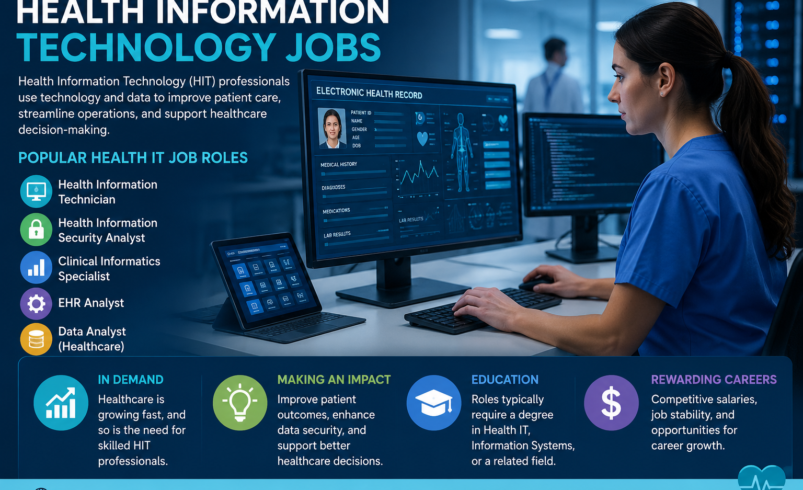

The healthcare sector has undergone a profound transformation, driven significantly by technological advancements. This evolution has created a robust demand for skilled professionals in health information technology jobs. From managing patient data to securing complex systems, technology is now central to delivering efficient, high-quality care. This article explores the diverse opportunities within health IT careers, detailing various roles, salary expectations, and pathways for aspiring professionals.
Understanding Health Information Technology (HIT)
Health Information Technology (HIT) encompasses the application of information technology to healthcare. This broad field involves the design, development, implementation, and maintenance of information systems that support clinical care, administrative functions, and patient management. Professionals in health information technology jobs ensure that healthcare providers have access to accurate, timely, and secure patient data, which is crucial for diagnosis, treatment, and operational efficiency. HIT also plays a vital role in protecting patient privacy and ensuring compliance with stringent healthcare regulations.
Why Health IT Matters to Modern Healthcare Organizations
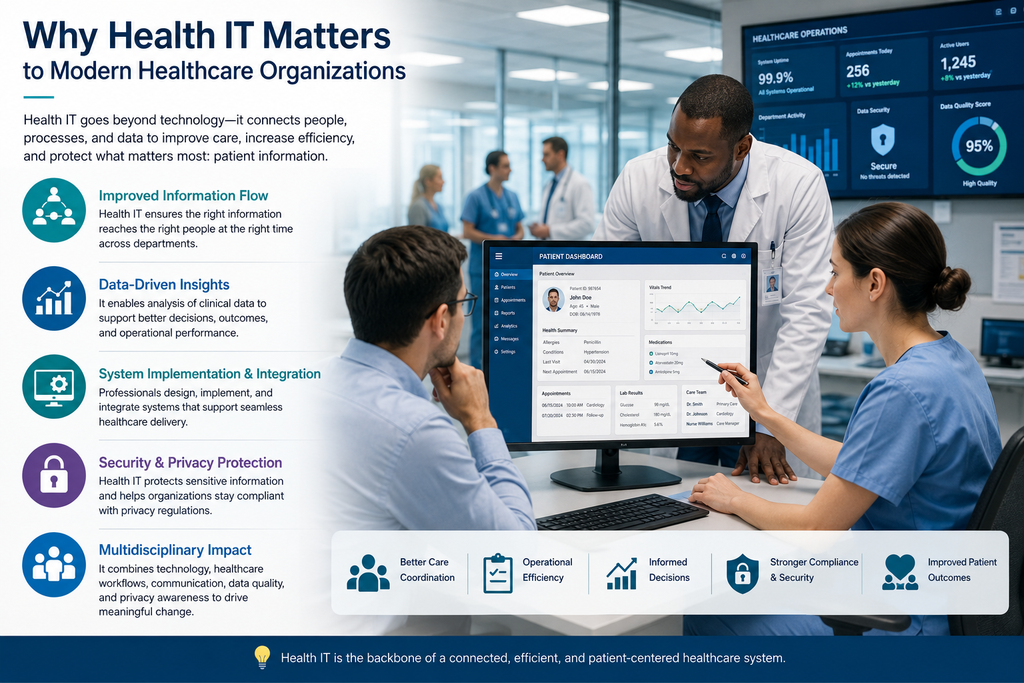
Health IT is not limited to maintaining computers or electronic health records. Professionals in this field can influence how information moves between departments, how clinical data is analyzed, how healthcare systems are implemented, and how sensitive information is protected.
This makes health IT a multidisciplinary field where technical knowledge, healthcare workflows, communication, data quality, and privacy awareness often overlap. For job seekers, understanding this combination can make it easier to choose a specialization that matches their interests and existing skills.
Diverse Health IT Careers: Roles and Responsibilities
The landscape of health IT careers is rich and varied, offering numerous specializations for individuals with different skill sets. These roles are essential for the smooth operation of modern healthcare systems and contribute directly to patient outcomes. Exploring these distinct paths can help individuals identify the most suitable health information technology jobs for their aspirations.
Health Informatics Jobs: Bridging Clinical and Technical Worlds
Professionals in health informatics jobs serve as a critical link between clinical practice and information technology. They focus on the acquisition, storage, retrieval, and use of health information to improve patient care and healthcare delivery. This often involves analyzing complex health data, designing user-friendly electronic health record (EHR) systems, and developing strategies to optimize information flow within healthcare organizations. Their work directly impacts clinical decision-making and operational workflows.
Health Data Analyst Jobs: Interpreting Healthcare Insights
Health data analyst jobs involve collecting, processing, and interpreting large volumes of healthcare data. These professionals use statistical methods and data visualization tools to identify trends, measure outcomes, and inform strategic decisions. Their insights can help improve public health initiatives, optimize resource allocation, and enhance patient safety. A strong analytical mind and proficiency with data analysis software are key for success in this area.
Health Information Management Jobs: Ensuring Data Integrity and Compliance
Health information management jobs are foundational to maintaining the accuracy, accessibility, and security of patient health information. These professionals manage health records, ensure compliance with regulatory standards like HIPAA (Health Insurance Portability and Accountability Act), and oversee the integrity of health information systems. Their work is crucial for legal and ethical data handling, as well as for supporting billing, coding, and research activities.
Medical IT Jobs: Supporting Healthcare Infrastructure
Medical IT jobs focus on the technical infrastructure that underpins healthcare operations. This includes roles such as network administrators, system engineers, cybersecurity specialists, and technical support staff. These professionals ensure that all hardware, software, and network systems function reliably and securely. They are responsible for maintaining electronic health records systems, medical imaging equipment, and telehealth platforms, making sure that healthcare providers have the tools they need to deliver care without interruption.
Healthcare IT Privacy, Security, and Data Governance
Privacy and security are important areas of specialization across health IT. Professionals may work with access controls, data-quality processes, security procedures, privacy policies, and organizational safeguards designed to protect sensitive health information.
A practical understanding of privacy is therefore valuable even for professionals whose primary job is not cybersecurity. Health IT employees may need to understand who should have access to particular information, how information should be handled, and why accurate data governance matters.
Healthcare IT Salary Expectations: What Professionals Can Earn
The demand for skilled professionals in health information technology jobs contributes to competitive compensation. A healthcare IT salary can vary significantly based on factors such as experience, specialization, geographic location, and the type of healthcare organization. Entry-level positions typically offer a solid starting point, with substantial growth potential as professionals gain experience and acquire specialized skills or certifications. For instance, roles requiring advanced data analytics or cybersecurity expertise often command higher salaries. Certifications in specific EHR systems or IT security can also positively influence earning potential.
Current Health Information Technology Salary and Job Outlook
For a useful benchmark, the U.S. Bureau of Labor Statistics reports that health information technologists and medical registrars had a median annual wage of $68,020 in May 2025. The same occupational category had projected employment growth of 16% from 2025 to 2035, which is much faster than the average for all occupations. BLS also projects about 3,000 openings per year on average over that period.
These figures should be treated as a benchmark rather than a guaranteed salary for every health IT position. Actual compensation can differ considerably because health IT includes many occupations with different responsibilities, education requirements, technical skills, and levels of seniority. Candidates should compare current job postings and regional salary data for the specific role they are targeting.
The BLS data also shows why specialization can matter. Health information technologists may work with computerized healthcare systems, clinical databases, data validation, patient outcomes, and privacy and security, meaning that the skills required can vary significantly between employers and positions.
How to Get Into Health IT: Pathways and Preparation
For those considering a transition or starting a career, understanding how to get into health IT involves a combination of education, skill development, and strategic networking. The field welcomes individuals from diverse backgrounds, including those with clinical experience looking to leverage technology, and IT professionals seeking a meaningful application for their skills.
Essential Education and Skills for Health IT Careers
A strong educational foundation is beneficial for many health IT careers. Relevant degrees include computer science, information technology, health informatics, public health, or even nursing with an IT focus. Beyond formal education, critical skills include technical proficiency (e.g., database management, networking, programming), analytical thinking, problem-solving, and strong communication abilities. Understanding healthcare workflows and regulations is also highly valued.
The education requirement is not identical across every health IT occupation. According to the BLS, health information technologists and medical registrars typically need at least an associate degree, while some positions require a bachelor’s or master’s degree. Relevant programs may include health information management, healthcare-related disciplines, computer science, or information technology.
Valuable Health IT Certifications to Boost Your Profile
Obtaining specific health IT certifications can significantly enhance a candidate’s resume and demonstrate specialized knowledge, making them more competitive for health information technology jobs. Examples include certifications from organizations like HIMSS (Healthcare Information and Management Systems Society), CompTIA, or vendor-specific certifications for popular EHR systems (e.g., Epic, Cerner). These credentials validate expertise and commitment to the field.
Choosing a Certification Based on Your Career Goal
Certification choices are most useful when they match the job a candidate wants to perform. Health information professionals may consider credentials related to health information management, coding, privacy and security, data analytics, or documentation integrity.
Rather than collecting certifications without a clear objective, candidates can start by reviewing several job descriptions for their target position. The recurring requirements—such as EHR knowledge, data analysis, database skills, privacy knowledge, project management, or technical support—can then guide the choice of education and credentials.
Securing Entry-Level Health IT Jobs
For individuals seeking entry level health IT jobs, practical experience is key. Internships, volunteer work at healthcare facilities, or even shadowing professionals can provide valuable exposure. Tailoring resumes to highlight transferable skills, such as data analysis, project management, or customer support, is also crucial. Networking with professionals in the field and attending industry events can open doors to initial opportunities.
What Employers May Look for in Entry-Level Candidates
Entry-level applicants can strengthen their applications by demonstrating both technical ability and an understanding of healthcare’s information requirements. Useful evidence may include a school project involving healthcare data, an internship, experience with databases or spreadsheets, documentation experience, customer-support work, or a project that demonstrates problem-solving.
The BLS identifies analytical ability, attention to detail, integrity, interpersonal skills, and problem-solving as important qualities for health information technologists and medical registrars. These qualities are especially relevant because health IT professionals often need to work across technical and healthcare teams while maintaining accurate and confidential information.
A practical portfolio can also help candidates demonstrate skills rather than simply listing them. For example, an applicant could present a clearly documented data-analysis project using non-identifiable or publicly available data, explain the methodology used, and describe how the findings could support a healthcare-related decision.
Health IT Career Path Comparison
These categories can overlap, and job titles vary between employers. A candidate should review the actual responsibilities and qualifications listed in current job postings rather than assuming that every position with a similar title has the same requirements.
A Practical Example of Health IT Work
Consider a healthcare organization that notices clinicians are spending unnecessary time locating information in an electronic health record. A health IT professional might begin by documenting the existing workflow, gathering feedback from users, reviewing system data, identifying the source of the problem, and working with technical and clinical stakeholders on a solution. After implementation, the team could monitor whether the revised workflow improves efficiency and maintains data quality.
This example illustrates why health IT work requires more than technical knowledge. Professionals frequently need to understand user needs, healthcare workflows, data quality, privacy considerations, and change management at the same time.
The Future Outlook for Health Information Technology Jobs
The trajectory for health information technology jobs points towards continued growth and innovation. Advancements in artificial intelligence (AI), machine learning, telehealth, and big data analytics are continuously reshaping healthcare delivery. This means an ongoing demand for professionals who can implement and manage these cutting-edge technologies. The expansion of remote care and personalized medicine further solidifies the critical role of health IT careers in shaping the future of healthcare.
Emerging Skills for the Next Generation of Health IT Professionals
As healthcare organizations continue generating and using larger quantities of electronic health information, professionals may increasingly benefit from skills that combine technology with data quality, privacy, analytics, and healthcare operations.
For aspiring professionals, this means that long-term career preparation should not focus exclusively on one software platform. Building transferable skills in data analysis, systems thinking, privacy, communication, and problem-solving can provide a stronger foundation as healthcare technologies and employer requirements evolve.
Frequently Asked Questions About Health Information Technology Jobs
- What is the difference between health informatics and health information management? Health informatics focuses on the use of health data to improve clinical decision-making and patient outcomes, often involving data analysis and system design. Health information management primarily deals with the organization, accuracy, and security of patient records, ensuring compliance and data integrity.
- Are there many remote health IT jobs? Yes, the number of remote health information technology jobs has grown, especially for roles like data analysts, software developers, and some support positions, though on-site presence may still be required for certain infrastructure or clinical integration roles.
- What are common educational paths for entry level health IT jobs? Many start with a bachelor’s degree in IT, computer science, health informatics, or a related field. Associate degrees or specialized certifications can also provide a pathway, particularly for technical support or health information technician roles.
- Are health IT certifications necessary? While not always mandatory, health IT certifications can significantly boost your competitiveness, demonstrate specialized knowledge, and often lead to higher earning potential and more advanced roles.
- What skills are most useful for health information technology jobs? Useful skills vary by position, but analytical thinking, attention to detail, problem-solving, communication, data handling, privacy awareness, and technical proficiency are commonly relevant.
- Can I enter health IT without a four-year degree? Some health IT pathways can begin with an associate degree, certification, or relevant technical training, depending on the occupation and employer.
- Why is data privacy important in health IT? Healthcare professionals routinely work with sensitive health information. In the United States, HIPAA establishes federal privacy standards for protected health information held or transmitted by covered entities and gives individuals certain rights concerning their health information.
- Is health IT only a hospital-based career? No. Health information professionals can work across healthcare organizations and other settings, including academic institutions, consulting agencies, government agencies, and healthcare software companies.
- How can I gain experience before applying for my first health IT job? Candidates can build relevant experience through internships, academic projects, practical data-analysis exercises using non-identifiable datasets, volunteer opportunities, technical support experience, and projects that demonstrate healthcare-related problem-solving.
Conclusion: A Rewarding Path in Health Information Technology
The field of health information technology jobs offers a dynamic and impactful career path for those passionate about technology and healthcare. With a wide array of specializations, competitive compensation, and a future driven by continuous innovation, health IT careers provide opportunities to contribute directly to improving patient care and operational efficiency. Aspiring professionals with the right skills and dedication will find this sector to be a profoundly rewarding choice.
Career Planning Checklist for Aspiring Health IT Professionals
Before applying for health information technology jobs, candidates can use the following checklist to create a focused career plan:
- Identify one target health IT specialization rather than applying broadly to unrelated positions.
- Review current job descriptions to identify recurring education, technical, and communication requirements.
- Build practical evidence of relevant skills through projects, internships, coursework, or work experience.
- Learn the healthcare terminology, workflows, privacy principles, and data-quality concepts relevant to the desired position.
- Consider certifications only when they align with the targeted career path and employer requirements.
- Keep technical knowledge current because healthcare information systems, regulations, and data practices continue to evolve.
This approach can help turn a general interest in health IT into a more focused and evidence-based career strategy.
Health IT Career Path Comparison
| Career Path | Strong Fit For | Useful Skills | Common Focus |
| Health Informatics | People interested in healthcare and technology | EHRs, workflows, analytics, communication | Improving how health information is used |
| Health Data Analytics | People who enjoy numbers and research | Statistics, SQL, visualization, data interpretation | Turning healthcare data into useful insights |
| Health Information Management | People interested in records and compliance | Data quality, documentation, privacy, coding | Managing the integrity and protection of health information |
| Healthcare IT Support | Technical problem-solvers | Troubleshooting, networking, systems support | Keeping healthcare technology operational |
| Healthcare Cybersecurity | Security-focused professionals | Risk management, security controls, privacy | Protecting healthcare systems and information |
Sources for Key Statistics and Regulatory Information
U.S. Bureau of Labor Statistics (BLS): Health Information Technologists and Medical Registrars — salary, education, outlook, and occupational information.
U.S. Department of Health & Human Services (HHS): HIPAA Privacy Rule and minimum necessary guidance.
AHIMA: Health information management certification and career resources.