






Health Information Technology (HIT) plays a pivotal role in modern healthcare, driving efficiency, improving patient care, and securing sensitive data. As healthcare systems become increasingly digitized, the demand for skilled HIT professionals continues to grow. For those considering a career in this dynamic field, or current professionals looking to advance, understanding the typical health information technology salary is crucial. Compensation in HIT varies significantly based on factors like specific roles, level of experience, geographic location, and specialized skills. This guide explores these nuances to provide a clear picture of earning potential across the sector.
Overview of Health IT Jobs Salary Landscape
How to Interpret Health Information Technology Salary Data
Salary information for Health IT should be evaluated carefully because different sources may measure different occupations, experience levels, locations, and compensation types. A reported average may not represent what an entry-level employee, senior specialist, manager, or executive can realistically expect.
When comparing salary figures, look at the job title, geographic area, experience level, employment sector, and whether the figure represents base salary, total compensation, or an estimated range. Benefits such as health insurance, retirement contributions, bonuses, paid time off, and professional-development support can also affect the overall value of a compensation package.
For greater transparency, salary figures should ideally be compared with authoritative sources such as government occupational data, professional associations, employer job postings, and reputable compensation surveys. Readers should also check the publication date because Health IT compensation can change as technology, labor demand, and healthcare organizations’ hiring needs evolve.
The landscape for health IT jobs salary reflects the high demand for expertise at the intersection of healthcare and technology. Professionals who can manage electronic health records (EHRs), ensure data security, analyze health data, and implement new digital solutions are highly valued. The average health information technology salary generally outpaces many other IT sectors due to the specialized knowledge required and the critical nature of healthcare data. This demand is driven by ongoing digital transformation initiatives, regulatory compliance requirements, and the continuous push for improved patient outcomes through technology.
Earning Potential Across Key Health IT Roles
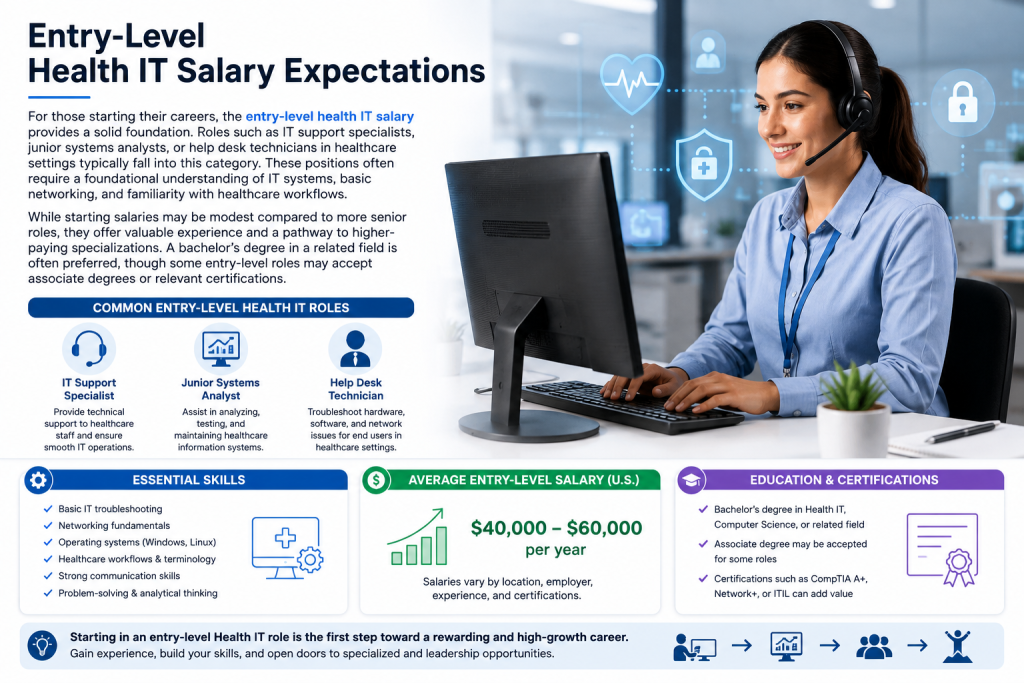
For those starting their careers, the entry-level health IT salary provides a solid foundation. Roles such as IT support specialists, junior systems analysts, or help desk technicians in healthcare settings typically fall into this category. These positions often require a foundational understanding of IT systems, basic networking, and familiarity with healthcare workflows. While starting salaries may be modest compared to more senior roles, they offer valuable experience and a pathway to higher-paying specializations. A bachelor’s degree in a related field is often preferred, though some entry-level roles may accept associate degrees or relevant certifications.
Health IT Specialist Salary Insights
As professionals gain experience, their earning potential increases significantly. The health IT specialist salary applies to roles like EMR/EHR specialists, clinical application specialists, network administrators, and data quality analysts. These positions demand more specialized skills, often involving direct interaction with clinical systems, database management, or network infrastructure within a healthcare context. Expertise in specific EHR platforms (e.g., Epic, Cerner) or certifications in areas like cybersecurity or cloud computing can significantly boost compensation for specialists.
Health IT Manager Salary and Leadership Roles
Leadership positions within Health IT command substantially higher salaries. The health IT manager salary encompasses roles such as IT project managers, IT directors, and team leads. These professionals are responsible for overseeing projects, managing teams, budgeting, and strategic planning for technology initiatives within healthcare organizations. Their compensation reflects the complexity of their responsibilities, which often include ensuring regulatory compliance, driving technological innovation, and managing large-scale system implementations. Strong leadership, communication, and technical skills are essential for these roles.
Distinguishing Health Informatics Salary from General Health IT
While often used interchangeably, health informatics is a specialized branch of Health IT. The health informatics salary typically reflects a blend of clinical knowledge, IT expertise, and analytical skills. Roles like clinical informaticists, nursing informaticists, or health data scientists focus on optimizing the use of health information to improve patient care, research, and public health. These professionals often have clinical backgrounds (e.g., nursing, medicine) combined with advanced degrees or certifications in informatics. Their unique skill set, bridging clinical practice with data science and technology, often leads to a premium compared to general health information technology salary roles that are purely technical.
Understanding Medical IT Salary and Health Information Management Salary
The terms medical IT salary and health information management salary often refer to specific sub-disciplines within the broader HIT field. Medical IT generally covers the technical support and infrastructure specific to medical devices, imaging systems, and clinical workstations. Professionals in this area ensure the seamless operation of technology directly involved in patient care. Health Information Management (HIM) focuses on the organization, analysis, and security of patient health information. Roles within HIM include medical coders, health information technicians, and privacy officers. While HIM roles might not always be as technically intensive as core IT roles, their critical importance in compliance, data integrity, and revenue cycle management ensures competitive compensation. For example, certified medical coders with experience can earn a strong health information management salary due to their specialized knowledge of billing and coding regulations.
Factors Influencing Your Health Information Technology Salary
Several key factors significantly impact a professional’s earning potential within Health Information Technology.
Impact of Experience, Education, and Certifications
Experience is a primary driver of a higher health information technology salary. Entry-level professionals can expect to see their salaries increase substantially with 3-5 years of experience, and even more so at the 10+ year mark. Education also plays a vital role; individuals with master’s degrees in Health Informatics, Computer Science, or Business Administration often command higher salaries, especially in leadership or specialized analytical roles. Furthermore, industry-recognized certifications such as CompTIA Security+, Certified Professional in Healthcare Information and Management Systems (CPHIMS), Certified Health Data Analyst (CHDA), or vendor-specific EHR certifications can significantly boost earning potential by validating specialized skills and knowledge.
Geographic Location: Health Information Technology Salary by State
Where you work has a considerable impact on your compensation. The health information technology salary by state varies due to regional demand, cost of living, and the concentration of major healthcare systems or technology hubs. States with large metropolitan areas, a high density of hospitals, or significant tech industries (e.g., California, New York, Massachusetts, Texas) often offer higher salaries to attract top talent. Conversely, states with lower costs of living or less demand for specialized HIT roles may have lower average salaries.
Specialization and Niche Skills
Developing expertise in high-demand, niche areas within healthcare IT can lead to a premium health information technology salary. Skills in cybersecurity, data analytics, cloud computing, artificial intelligence (AI), machine learning (ML), or telehealth platforms are particularly valuable. As healthcare organizations increasingly rely on these advanced technologies, professionals with proven expertise in these domains are highly sought after and can negotiate significantly higher compensation.
Highest Paying Health IT Jobs
Certain roles within Health IT consistently rank among the highest paying health IT jobs due to their strategic importance, complexity, and leadership responsibilities. These include:
- Chief Information Officer (CIO) / Chief Technology Officer (CTO): Oversees all IT strategy, operations, and infrastructure for a healthcare organization.
- Chief Medical Information Officer (CMIO) / Chief Nursing Information Officer (CNIO): Bridges the gap between clinical practice and IT, often requiring a medical or nursing degree in addition to IT expertise.
- Senior Data Scientist (Healthcare): Analyzes vast amounts of healthcare data to identify trends, improve patient outcomes, and inform strategic decisions.
- Cybersecurity Architect (Healthcare): Designs and implements robust security systems to protect sensitive patient data from breaches and cyber threats.
- Enterprise Architect (Healthcare): Develops and maintains the overall IT architecture, ensuring systems are integrated, scalable, and aligned with organizational goals.
These positions typically require extensive experience, advanced degrees, and a proven track record of success in complex healthcare environments.
Frequently Asked Questions About Health Information Technology Salary
Health IT Salary Checklist for Career Planning
Before evaluating a Health IT position or negotiating compensation, consider the following:
- ☐ Compare the exact job title and responsibilities rather than relying on a broad Health IT salary category.
- ☐ Check salary information from authoritative and recently published sources.
- ☐ Consider experience requirements and the seniority of the position.
- ☐ Compare the required degree, certifications, and technical skills with your current qualifications.
- ☐ Account for geographic location, remote-work policies, and cost-of-living differences.
- ☐ Review benefits, bonuses, retirement contributions, and other forms of total compensation.
- ☐ Look for opportunities to build measurable experience with EHRs, cybersecurity, analytics, cloud technology, informatics, or project management.
- ☐ Keep a record of measurable professional achievements to support future promotion and salary negotiations.
Here are answers to common questions regarding compensation in Health Information Technology:
- What is the career progression in HIT? Career progression often starts with entry-level support roles, moving to specialist positions (e.g., EMR analyst, network engineer), then to management (e.g., IT project manager, director), and finally to executive leadership (e.g., CIO, CMIO). Specialization in areas like cybersecurity or data science can also lead to senior individual contributor roles with high earning potential.
- Do certifications really boost salary? Yes, industry-recognized certifications (e.g., CPHIMS, CompTIA Security+, Epic certifications) can significantly enhance your health information technology salary. They validate specialized skills and knowledge, making you more competitive and valuable to employers.
- How does working for a hospital versus a vendor affect pay? Salaries can vary. Large hospital systems or academic medical centers might offer competitive salaries and comprehensive benefits. Healthcare IT vendors (e.g., Epic, Cerner, Philips) often pay very well, especially for roles requiring deep product expertise, implementation skills, or sales engineering. Consulting firms specializing in healthcare IT also tend to offer high compensation for experienced professionals.
Conclusion: Navigating Your Health IT Career for Optimal Salary
Expert Perspective: What Makes a Health IT Professional More Valuable?
The strongest Health IT professionals typically combine technical knowledge with an understanding of healthcare operations. Technical skills can help someone operate or implement a system, but understanding clinical workflows, privacy requirements, data quality, organizational priorities, and user needs can make that expertise more useful to a healthcare employer.
For career development, professionals should focus on building demonstrable expertise rather than collecting credentials without practical application. A portfolio of successful projects, documented improvements, specialized knowledge, and relevant professional experience can provide stronger evidence of expertise than a list of qualifications alone.
The field of Health Information Technology offers robust career opportunities with competitive compensation. Understanding the factors that influence your health information technology salary – including your role, experience, education, certifications, location, and specialized skills – is key to maximizing your earning potential. The sector’s continuous growth, driven by technological advancements and evolving healthcare needs, ensures a diverse range of roles and a promising outlook for professionals. By strategically planning your career path and continuously developing in-demand skills, you can navigate the HIT landscape for a rewarding and well-compensated career.