


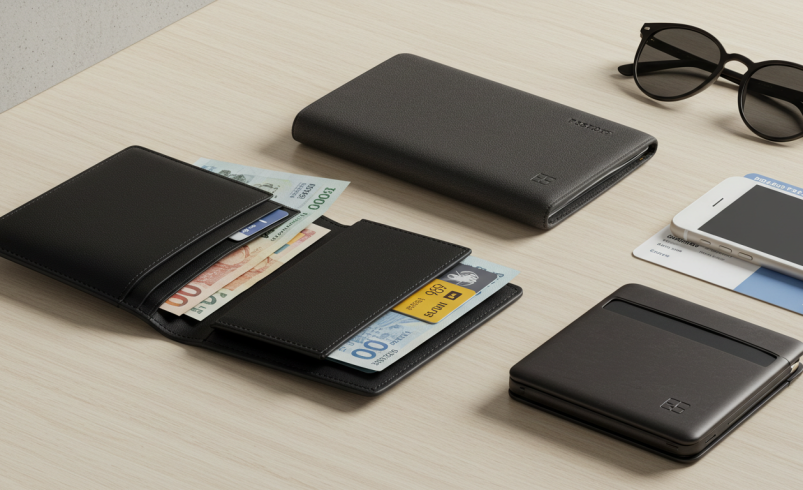

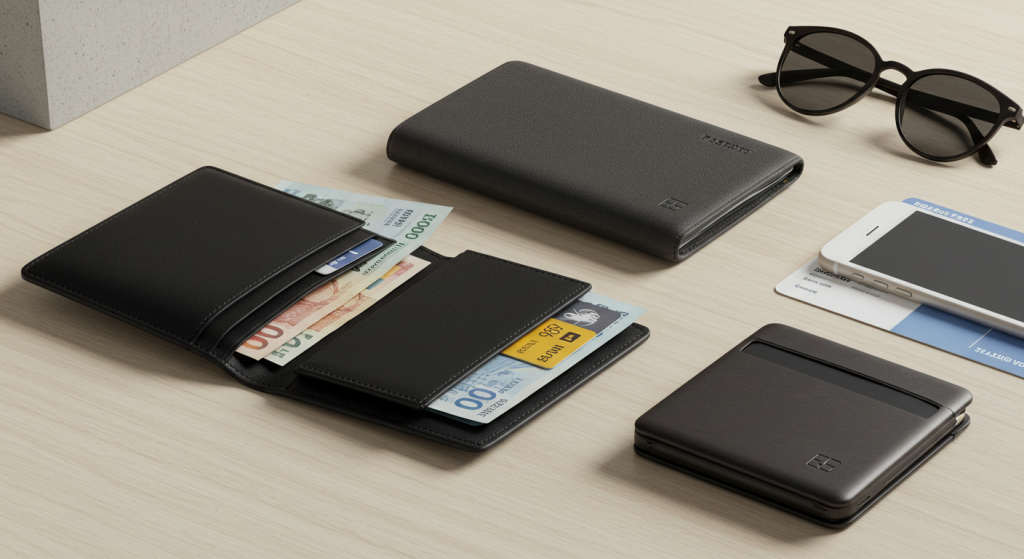
A professional flat lay photograph displays a curated collection of premium travel wallets on a light-colored surface. One dark leather wallet is open, showcasing a passport, international currency, and payment cards. Beside it, a closed minimalist wallet made of durable synthetic material and a larger travel organizer wallet are visible. Essential travel items like a boarding pass, smartphone, and sunglasses complete the organized, modern composition, highlighting readiness and security for any journey.
__________________________________________________________________
Traveling, whether for business or leisure, involves managing important documents, multiple currencies, and payment cards. Keeping these essentials secure and organized is paramount for a smooth experience. A dedicated travel wallet offers a specialized solution, providing enhanced security features and thoughtful organization that a standard wallet often lacks. This article explores why investing in one of the best travel wallets is a smart decision for any traveler, detailing key features to consider and highlighting various types designed to meet diverse needs. We will guide you through selecting a wallet that ensures your valuables are protected and easily accessible, allowing you to focus on your journey.
Why a Dedicated Travel Wallet Matters for Every Journey
While your everyday wallet serves its purpose at home, the demands of travel necessitate a more robust and organized approach to carrying your valuables. A specialized travel wallet provides distinct advantages, primarily focusing on enhanced security and superior organizational capabilities. These benefits contribute significantly to a more relaxed and efficient travel experience, making a dedicated travel accessory a valuable part of your travel gear.
Enhanced Security Features for Peace of Mind
One of the primary reasons to opt for a travel-specific wallet is the superior protection it offers. Many modern travel wallets incorporate advanced security measures designed to safeguard against common travel-related threats. This includes features like RFID blocking travel wallet technology, which prevents unauthorized scanning of your credit cards, passports, and other identification documents. This protection is crucial for maintaining your financial and personal data security against digital skimming attempts. Beyond digital threats, many travel wallets feature robust closure mechanisms, such as zippers or strong snaps, to prevent items from accidentally falling out or being easily accessed by pickpockets, contributing to overall travel security.
Streamlined Organization for Travel Documents
Managing passports, boarding passes, multiple currencies, and various cards can quickly become chaotic when traveling. A well-designed travel wallet excels at helping you organize travel documents efficiently. These wallets typically feature dedicated slots and compartments for passports, separate pockets for different denominations of cash, multiple card slots, and sometimes even a pen loop or a space for SIM cards. This structured approach ensures that your critical items are not only secure but also immediately accessible when needed, eliminating frantic searches at airport security or immigration counters. A good passport wallet, for instance, keeps your most vital travel document protected and ready.
Durability and Protection Against Wear and Tear
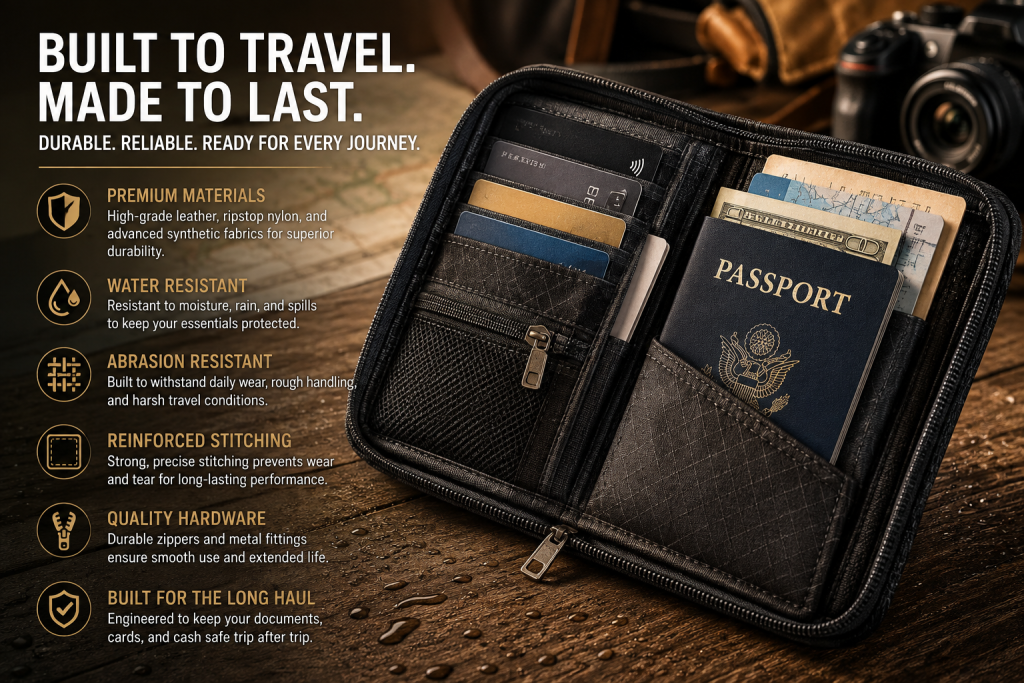
Travel exposes your belongings to various conditions, from crowded airports to diverse climates. Standard wallets may not be built to withstand such rigors. A durable travel wallet is constructed from materials chosen for their resilience and longevity. Materials like high-grade leather, ripstop nylon, or specialized synthetic fabrics are common, offering resistance to abrasion, moisture, and general wear. Reinforced stitching and quality hardware further enhance their lifespan, ensuring your wallet remains functional and protective throughout numerous journeys. Investing in a robust travel wallet means less worry about your essential items being compromised by the physical demands of travel.
Key Features to Look for in the Best Travel Wallets
Selecting the ideal travel wallet involves evaluating several critical features that align with your travel style and needs. Understanding these aspects will help you determine how to choose travel wallet that offers the best combination of security, organization, and convenience. Focusing on these travel wallet features ensures you make an informed decision.
Material and Construction: Longevity and Style
The material of a travel wallet significantly impacts its durability, weight, and aesthetic. Common choices include:
• Leather: A classic choice, a leather travel wallet offers a sophisticated look and excellent durability, often developing a unique patina over time. It can be heavier and more susceptible to water damage than synthetic options.
• Nylon/Polyester: Lightweight, water-resistant, and highly durable, a nylon travel wallet is practical for active travelers. These materials are often used in more casual or outdoor-oriented designs.
• Synthetic Fabrics (e.g., Tyvek, Ripstop): Known for being incredibly lightweight, tear-resistant, and often water-resistant, these materials are ideal for minimalist or adventure travel.
Capacity and Compartments: Matching Your Travel Needs
The internal layout and capacity are crucial. Assess what you typically carry:
• Passport Slots: Essential for international travel. Some wallets accommodate multiple passports for family travel.
• Card Slots: Enough for your credit cards, debit cards, and loyalty cards without being overly bulky.
• Cash Pockets: Dedicated compartments for different currencies are a significant advantage, making it a true multi-currency wallet.
• Boarding Pass/Ticket Sleeves: Flat pockets to keep paper documents unfolded and accessible.
• Coin Pouch: A zippered section for loose change can be very useful.
• Pen Loop/SIM Card Slot: Small but convenient additions for international travelers.
travel wallet capacity
Advanced Security: RFID Blocking and Closure Mechanisms
Beyond basic protection, look for advanced security features. RFID blocking technology is a standard in many quality travel wallets, protecting your sensitive data from electronic theft. The closure mechanism is equally important for physical security:
RFID Blocking: What It Protects and What It Doesn’t
RFID protection should be viewed as one layer of travel security rather than a complete anti-theft solution. An ePassport contains a contactless chip and security mechanisms designed to protect the integrity of its data; ICAO explains that ePassport validation checks the issuing authority’s digital signature and confirms that the biographical and biometric information has not been altered. A wallet can therefore add physical shielding, but it does not replace careful handling of the passport or normal payment-card security practices. (Source: International Civil Aviation Organization, ePassport Basics and ePassport Validation.)
Payment cards also use established chip and contactless security technologies. EMVCo explains that EMV contactless transactions use a one-time-use security code for each transaction. For that reason, an RFID-blocking wallet should not be presented as a guarantee against all forms of card fraud; it is better described as an additional shielding feature for compatible contactless items. (Source: EMVCo, EMV Contactless Chip.)
• Zippers: Provide the most secure closure, preventing items from falling out and making it harder for pickpockets.
• Snaps/Buttons: Offer a good balance of security and quick access.
• Magnetic Closures: Convenient but generally less secure than zippers or snaps.
• Velcro: Durable and secure, but can be noisy and less aesthetically pleasing for some.
secure wallet closure
Size and Portability: Comfort and Convenience
Consider how you plan to carry your wallet. A compact travel wallet is ideal for fitting into front pockets or small bags, while larger document holders might be better suited for carry-on luggage. Some wallets are designed to be worn around the neck or waist, offering an extra layer of security. Evaluate the dimensions to ensure it’s a portable wallet that doesn’t become a burden. A wallet that is too bulky can be uncomfortable and draw unwanted attention.
Style and Aesthetics: Personal Preference and Professionalism
While functionality is key, the appearance of your travel wallet also matters. Whether you prefer a sleek, minimalist design or a more rugged, casual look, there are options to suit every taste. For business travelers, a sophisticated and professional design can complement other professional travel accessories. For leisure, a more vibrant or unique style might be preferred. Choose a wallet that reflects your personal style and makes you feel confident.
Top Picks: The Best Travel Wallets for Every Traveler Type
The market offers a diverse range of travel wallets, each tailored to specific travel styles and needs. Understanding these categories can help you identify the best travel wallets for men or best travel wallets for women, depending on your individual requirements and preferences. Here are some common types of travel wallets designed for various travelers.
How to Evaluate a Travel Wallet Before Buying
A useful evaluation goes beyond appearance and the number of compartments. Compare a travel wallet against the items you actually carry and the conditions in which you travel. A practical assessment should include:
• Capacity under realistic use: Load the wallet with the passport(s), cards, cash, tickets, and other essentials you normally carry, then check whether it remains comfortable and easy to close.
• Accessibility: Check whether the passport and most frequently used cards can be reached quickly without opening or removing every other item.
• Portability: Measure the wallet when fully loaded, not empty. A slim wallet that becomes bulky after filling every slot may not be a genuinely compact option.
• Closure and retention: Open and close the wallet repeatedly and check whether the closure keeps contents contained during normal movement. Avoid treating any closure type as an absolute guarantee against theft.
• Material and construction: Examine stitching, seams, edge finishing, hardware, lining, and the manufacturer’s stated material-care requirements rather than judging durability from appearance alone.
• Security claims: Look for specific manufacturer information about RFID shielding or other security features. Where a product makes a performance claim, prefer independently verifiable specifications or testing information when available.
• Travel scenario fit: A minimalist wallet, family organizer, and document holder solve different problems. The best choice is the one that fits the trip rather than the one with the largest feature list.
For the Minimalist Traveler: Slim and Essential
For those who prefer to travel light and carry only the absolute necessities, a slim travel wallet is an excellent choice. These wallets are designed with a minimalist approach, focusing on a compact profile that can easily fit into a front pocket without creating bulk. They typically feature just enough slots for a passport, a few essential cards, and a small amount of folded cash. Often made from lightweight materials like thin leather or synthetic fabrics, they prioritize portability and discretion. A minimalist passport holder ensures your most vital document is secure without adding unnecessary weight or size.
For the Organized Globetrotter: All-in-One Document Holders
Travelers who manage multiple documents, currencies, and cards will benefit from an all-in-one document holder. These wallets are designed for comprehensive organization, featuring extensive compartments for multiple passports, boarding passes, various credit and debit cards, and separate sections for different foreign currencies. A passport organizer wallet often includes a pen loop, a zippered coin pouch, and sometimes even a small pocket for a smartphone or SIM cards. These are ideal for keeping all your travel essentials neatly arranged and easily accessible, making them a true travel document holder.
For the Tech-Savvy Adventurer: Smart Features and Protection
For travelers who prioritize advanced security and integration with technology, wallets with smart features are increasingly popular. These often include enhanced RFID protected wallet technology, offering superior shielding against electronic theft. Some designs might incorporate features like hidden compartments for tracking devices, or even water-resistant materials to protect electronics. While not typically including power banks directly, these wallets focus on robust protection for digital assets and documents, making them suitable tech travel accessories for the modern explorer.
For Family Travel: Large Capacity and Multiple Passports
Family travel often means managing documents for several individuals. A family travel wallet is specifically designed with a larger capacity to accommodate multiple passports, boarding passes, and various cards for each family member. These wallets typically feature numerous dedicated slots and often a secure zippered closure to keep everything contained. They help streamline airport check-ins and immigration processes by keeping all essential family documents in one secure and easily accessible place, functioning as an effective multiple passport holder.
For Budget-Conscious Explorers: Value and Durability
Travelers seeking functionality and durability without a significant investment can find excellent options among affordable travel wallets. These wallets prioritize essential features like RFID blocking, adequate capacity for passports and cards, and robust construction using durable synthetic materials. While they may not feature premium leather or intricate designs, they offer reliable protection and organization. An affordable travel wallet proves that effective travel security and convenience do not always require a high price point, making them a smart choice for those building their budget travel gear collection.
Quick Decision Guide: Which Travel Wallet Style Fits You?
Use the following guide as a practical shortcut when comparing travel wallet designs:
• Carry only a passport, a few cards, and limited cash → Choose a slim or minimalist travel wallet.
• Carry several documents and currencies → Choose an all-in-one organizer with clearly separated compartments.
• Travel with multiple family members’ documents → Choose a larger organizer with dedicated passport and document sections.
• Spend a lot of time outdoors or in changing weather → Prioritize construction and material properties that match the manufacturer’s stated water and abrasion resistance.
• Need a wallet for both travel and everyday use → Favor a compact design and avoid paying for capacity you will rarely use.
How to Choose the Right Travel Wallet for Your Next Journey
Selecting the optimal travel wallet requires a thoughtful assessment of your personal travel habits and specific needs. This travel wallet guide will help you navigate the options and make an informed decision. Consider the following steps when choosing a travel wallet:
What to Keep in Your Travel Wallet—and What to Leave Elsewhere
A travel wallet is most useful when it reduces clutter rather than becoming a container for every important item you own. Before departure, decide which documents and payment methods are genuinely needed for the trip. Carrying fewer unnecessary cards and documents can make the wallet easier to organize and reduce the number of items that would need to be replaced if the wallet were lost.
• Keep travel-critical documents together only when doing so makes them easier to manage; consider whether separating a backup payment method from your main wallet would reduce the impact of loss.
• Carry only the cards and identification documents that are appropriate for the journey.
• Keep emergency contact and trip information accessible through a secure backup method rather than relying entirely on one physical wallet.
• Before leaving accommodation, check that the wallet contains the documents required for the next part of the journey.
1. Assess Your Typical Travel Style: Are you a minimalist backpacker, a business professional, or traveling with family? Your style dictates the required capacity and features.
2. Identify Essential Items: List everything you need to carry: passport(s), number of cards, amount of cash (and currencies), boarding passes, vaccination cards, etc. This will determine the necessary compartments and overall size.
3. Prioritize Security Features: Is RFID blocking a must-have? Do you prefer a zippered closure for maximum security, or a snap for quicker access?
4. Consider Material and Durability: If you travel frequently or to rugged destinations, opt for durable, water-resistant materials. For occasional, more formal trips, a classic leather option might be suitable.
5. Evaluate Portability: How will you carry it? In a jacket pocket, a small crossbody bag, or a larger carry-on? Ensure the wallet’s dimensions fit your preferred carrying method comfortably.
6. Set a Budget: Travel wallets come in a wide range of prices. Determine what you are willing to spend, keeping in mind that a good quality wallet is an investment in your travel security and convenience.
By systematically evaluating these points, you can narrow down your choices and find a travel wallet that perfectly complements your adventures.
Frequently Asked Questions About Travel Wallets
Do I really need a travel wallet if I have a regular wallet?
While a regular wallet can hold some essentials, a dedicated travel wallet offers specialized features like passport slots, multiple currency compartments, and enhanced security (e.g., RFID blocking) that are specifically designed for the complexities of travel. It helps you keep all travel documents organized and secure in one place, reducing stress and the risk of loss or theft. Therefore, for optimal organization and security, a travel wallet is highly recommended.
How effective is RFID blocking in travel wallets?
RFID blocking technology in travel wallets is designed to create a shield that prevents unauthorized radio frequency identification (RFID) readers from scanning the data embedded in your passport, credit cards, and other RFID-enabled documents. When properly implemented, it is highly effective at protecting against electronic pickpocketing. Look for wallets that explicitly state they have RFID blocking capabilities, often using materials like metallic fibers or aluminum layers.
Does RFID Blocking Make a Travel Wallet Completely Secure?
No. RFID shielding addresses a specific contactless-reading scenario and should not be treated as a complete travel-security system. ICAO describes security and access controls built into ePassports, while EMVCo describes security mechanisms used in contactless payment transactions. A travel wallet can add organization and physical shielding, but travelers should still protect the wallet itself, monitor their cards and documents, and follow the security guidance provided by the relevant passport authority and card issuer.
Can I use my travel wallet as an everyday wallet?
Some compact or minimalist travel wallets can certainly double as everyday wallets, especially if they are not overly large and fit comfortably in your pocket or bag. However, many larger travel wallets are designed to hold multiple passports, boarding passes, and various currencies, making them bulkier than ideal for daily use. It depends on the specific design and your personal preference for wallet size and capacity.
How do I clean and maintain my travel wallet?
Maintenance depends on the material. For leather wallets, use a damp cloth for surface dirt and a leather conditioner periodically to keep the material supple. For nylon or synthetic wallets, a mild soap and water solution with a soft brush or cloth is usually sufficient. Always check the manufacturer’s care instructions. Avoid harsh chemicals or excessive water, and allow the wallet to air dry completely.
Conclusion: Invest in Security and Organization with the Best Travel Wallets
Choosing one of the best travel wallets is a practical step towards ensuring a more secure and organized travel experience. From safeguarding your personal data with RFID blocking technology to providing dedicated compartments for passports, currencies, and cards, these specialized accessories offer peace of mind that standard wallets cannot match. By considering factors such as material, capacity, security features, and portability, you can select a wallet that perfectly aligns with your individual travel style and needs. Prioritizing a reliable travel wallet means investing in the seamless flow of your journey, allowing you to focus on the adventure ahead with confidence in your secure travel essentials.
Authoritative Sources for Travel-Wallet Security
For readers who want to verify the technical security information discussed in this guide, the following primary or industry-authoritative sources provide useful background:
• International Civil Aviation Organization (ICAO) — ePassport Basics and ePassport Validation: information on ePassport chips, digital signatures, and validation.
• EMVCo — EMV Contactless Chip: information on contactless payment technology and transaction security.