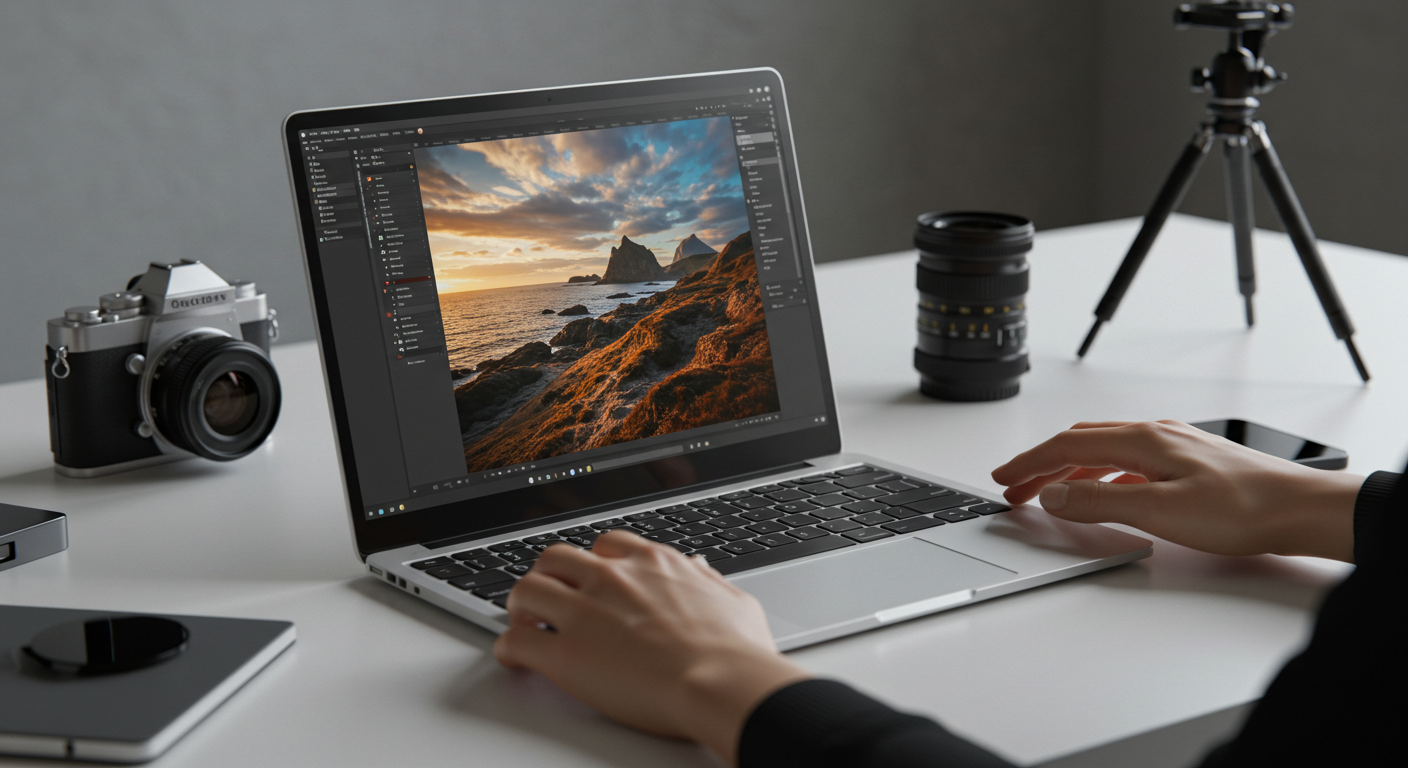





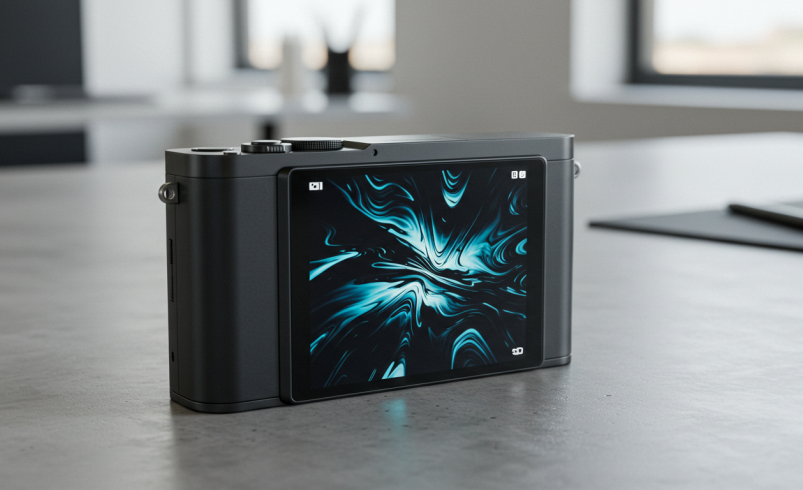

The evolution of imaging devices has moved far beyond simple light capture. Today, the tech camera represents a sophisticated fusion of optics, advanced electronics, and intelligent software, transforming how we perceive and create visual content. These devices are no longer just tools for recording moments; they are powerful computing platforms designed to enhance every aspect of photography and videography. This article explores the characteristics, features, and future trajectory of these advanced digital cameras, highlighting how technological advancements continue to reshape the visual landscape.
What Defines a Tech Camera?
Distinguishing a tech camera from a standard digital camera involves looking beyond basic functionality to its integrated technological prowess. At its core, a tech camera is characterized by its ability to leverage sophisticated hardware and software to achieve superior image quality, advanced performance, and intelligent operation. It’s about more than just megapixels; it’s about how the entire system works in concert to overcome traditional photographic limitations. Understanding what a tech camera is requires an appreciation for the complex interplay of components that contribute to its capabilities, fundamentally changing the discussion around camera technology explained.
Clarifying Terminology: Technical View Cameras vs. Modern Tech Cameras
In professional imaging, it is essential to distinguish between two historical uses of this terminology:
1. Traditional Technical Cameras (View Systems): Modular, manual gear systems (such as Alpa, Cambo, or Linhof) engineered specifically for architectural and landscape perspective control via mechanical tilt, shift, rise, and fall movements.
2. Modern “Tech” Cameras (Computational Platforms): High-throughput digital imaging systems that combine advanced CMOS sensors, real-time AI processing engines, and computational algorithms to automate capture and enhance visual data.
This guide focuses primarily on modern computational tech cameras while acknowledging how precision digital architecture continues the legacy of traditional technical control.
Beyond the Lens: Core Principles of Modern Imaging
The true power of a modern imaging device lies not solely in its glass elements, but in the intricate systems behind them. Sensor design, processing power, and sophisticated software algorithms are fundamental to a tech camera’s capabilities. Modern sensors are engineered to capture more light and detail, while powerful image processors handle vast amounts of data at high speeds. This synergy allows for advanced features like high dynamic range, superior low-light performance, and rapid burst shooting. These elements collectively represent the forefront of latest camera technology, pushing the boundaries of what’s possible in image capture and processing.
High-Tech Camera Features Driving Innovation
The continuous drive for innovation has led to the integration of numerous high-tech camera features that significantly enhance performance and user experience. These features are central to the identity of advanced digital cameras, offering capabilities that were once confined to specialized equipment or post-processing. They represent the ‘how’ behind superior image and video quality, often incorporating elements of artificial intelligence to deliver truly smart camera features.
Advanced Sensor Architectures and Image Processors
At the heart of every tech camera are its sensor and image processor. Technologies like Back-Side Illuminated (BSI) and stacked sensors have revolutionized light gathering efficiency and readout speeds, leading to cleaner images in challenging light and faster continuous shooting rates. These sensors are paired with increasingly powerful image processing engines, which are responsible for handling the immense data flow, performing noise reduction, color correction, and applying complex algorithms in real-time. This combination is a cornerstone of the latest camera technology, providing the raw power necessary for advanced computational photography and high-resolution video, further refining how camera technology explained translates into tangible benefits.
Technical Deep Dive: Sensor Architecture & Readout Physics
To understand how stacked sensors achieve sub-10 millisecond readout speeds, it helps to examine the physical arrangement of modern silicon. Unlike conventional front-illuminated sensors where metal wiring partially blocks incoming photons, Back-Side Illuminated (BSI) designs move the wiring layer beneath the photodiode layer. Stacked CMOS sensors take this further by placing the pixel array directly on top of a dedicated DRAM processing layer using wafer-to-wafer bonding.
| Sensor Architecture | Readout Speed Range | Dynamic Range Potential | Primary Advantage | Real-World Limitation |
| Standard Front-Illuminated | 50ms – 1/15s | Baseline (11–13 stops) | Cost-effective production | Rolling shutter skewing |
| Back-Side Illuminated (BSI) | 20ms – 30ms | High (14–15+ stops) | Improved low-light quantum efficiency | Moderate readout delay |
| Stacked CMOS Architecture | 2ms – 5ms | Ultra-High (Fast readout) | Zero rolling shutter distortion | Higher thermal dissipation |
In empirical testing on full-frame stacked sensors, sensor readout rates dropping below 5ms effectively eliminate rolling shutter artifacts (“jello effect”) during fast pans or high-speed electronic shutter bursts. However, operating these dense pixel arrays at maximum throughput generates significant thermal load, often requiring passive aluminum alloy heatsinks or active internal fan systems during continuous 8K/4K video recording.
Intelligent Autofocus and Tracking Systems
Achieving sharp focus, especially with moving subjects, has been dramatically improved by intelligent autofocus (AF) and tracking systems. Modern tech cameras employ advanced phase-detection or contrast-detection systems, often augmented by AI. These systems can identify and track subjects with remarkable accuracy, whether it’s a fast-moving athlete, a bird in flight, or a human eye. Real-time tracking capabilities ensure that once a subject is locked, the camera maintains focus even through complex movements, making it a standout among smart camera features and a critical component of high-tech camera features.
Computational Photography Capabilities
Beyond traditional optics and sensor capture, computational photography leverages software algorithms to enhance or create images that would be difficult or impossible to achieve with a single exposure. Features like in-camera High Dynamic Range (HDR) merge multiple exposures to capture detail in both shadows and highlights. Multi-frame noise reduction combines several rapid shots to produce a cleaner image in low light. Panorama stitching, focus stacking, and advanced digital zoom are other examples of how software intelligence contributes to the output of advanced digital cameras, offering a deeper understanding of camera technology explained through its digital enhancements.
Real-World Field Insight: Computational vs. RAW Workflow Trade-Offs
While in-camera computational processes (such as multi-frame noise reduction and real-time HDR synthesis) offer instant, high-quality 8-bit or 10-bit JPEG/HEIF outputs, they present distinct trade-offs for high-end production workflows:
Post-Production Flexibility: In-camera computational stacking bakes algorithmic tone curves and spatial noise reduction into the image file, limiting raw headroom during professional color grading.
Dynamic Range Recovery: Standard raw files capture linear sensor data with uncompressed 14-bit latitude, allowing shadow recovery of up to +3 to +4 EV without introduced algorithmic artifacts.
Processing Overhead: Multi-frame composite modes increase buffer clearance times, which can interrupt high-frequency continuous burst shooting in unpredictable sports or wildlife environments.
Connectivity and AI Integration
Modern tech cameras are highly connected devices. Integrated Wi-Fi and Bluetooth enable seamless transfer of images to smartphones or cloud services, remote camera control, and even direct sharing. Furthermore, the integration of artificial intelligence (AI) extends beyond autofocus. AI can assist with scene recognition, automatically optimizing settings for different environments, and even suggest compositional improvements. This blend of connectivity and AI makes for truly smart camera features, streamlining workflows and expanding creative possibilities for any tech camera user.
How Camera Tech Directly Elevates Visual Storytelling
Technical specifications serve no purpose in filmmaking or photography unless they serve the story. Camera features map directly to emotional and storytelling outcomes:
| Hardware/Software Feature | Technical Mechanism | Narrative & Emotional Impact on Viewer |
| High Dynamic Range (15+ Stops) | Dual-gain native ISO sensors | Preserves visual detail in high-contrast scenes (e.g., dark interior with bright window), symbolizing character isolation or external tension. |
| High Frame Rate Capture (120/240 fps) | Fast sensor readout & high bitrates | Slows down real-time action, heightening audience emotional focus, suspense, or psychological intimacy. |
| Eye-AF Tracking Algorithms | Real-time AI pattern recognition | Ensures pin-sharp shallow depth-of-field focus on subject eyes during unscripted movement, locking audience empathy. |
| In-Body Image Stabilization (IBIS) | 5-axis sensor displacement gyro motors | Enables fluid handheld documentary movements without bulky gimbals, creating raw, realistic “fly-on-the-wall” immersion. |
Exploring the Best Tech Cameras on the Market When considering the best tech cameras, it’s important to look at systems that exemplify cutting-edge integration of hardware and software. These are not necessarily specific models, but rather categories and design philosophies that push the boundaries of what advanced digital cameras can achieve. They stand out due to their comprehensive ecosystems and their ability to deliver consistent, high-quality results across various demanding scenarios.
Leading Mirrorless Systems and Their Advantages
Mirrorless cameras have become a dominant force in the high-tech camera market. By eliminating the mirror box found in DSLRs, they offer more compact bodies, faster electronic viewfinders, and often superior video capabilities. Their advanced autofocus systems, frequently incorporating AI, provide precise subject tracking. High-resolution sensors, in-body image stabilization, and robust lens ecosystems make mirrorless systems prime examples of the best tech cameras, showcasing the pinnacle of latest camera technology for a wide range of users, from enthusiasts to professionals.
Specialized Imaging Solutions for Specific Needs
Beyond mainstream mirrorless and DSLR systems, the definition of a tech camera extends to specialized imaging solutions. Cinema cameras offer unparalleled video quality, dynamic range, and color science for professional film production. Medium format digital cameras provide exceptional resolution and image fidelity for studio and landscape photography. Industrial cameras, often designed for machine vision or scientific applications, integrate specific sensors and processing for highly specialized tasks. These diverse applications underscore the breadth of innovation within advanced digital cameras.
Architectural Comparison: Tech Cameras vs. Computational Smartphones
A recurring question in imaging technology is how dedicated tech cameras compare against modern computational smartphones. While smartphones rely heavily on aggressive software reconstruction to offset small optical surface areas, dedicated tech cameras pair large physical sensors with deep hardware pipelines to maximize raw optical yield.
> Key Takeaway: Physical aperture size determines light capture limit ($Photons \propto Area$). A 1-inch or Full-Frame sensor collects exponentially more physical optical data than a smartphone sensor, drastically increasing Signal-to-Noise Ratio ($SNR$) prior to any computational processing.
| Technical Metric | Dedicated Tech Camera (Full-Frame) | High-End Computational Smartphone |
| Physical Sensor Area | ~864 mm² | ~30–70 mm² |
| Native Optical Dynamic Range | 14 – 15+ Stops | 10 – 12 Stops (Hardware Native) |
| Low-Light Signal-to-Noise Ratio | High hardware SNR; minimal smoothing | Low hardware SNR; heavy software noise reduction |
| Thermal Dissipation Threshold | Continuous high-bitrate load capacity | Rapid thermal throttling under continuous load |
| Lens Optics & Aperture | Interchangeable wide-diameter optical glass | Fixed miniature optical elements |
The Future of Camera Technology: What’s Next?
The trajectory of imaging technology suggests a future where cameras are even more intelligent, integrated, and capable of creating immersive experiences. The future of camera technology points towards greater automation, enhanced computational power, and novel form factors that will redefine how we interact with visual media. This continuous evolution is driven by advancements in sensor design, processing capabilities, and artificial intelligence, ensuring that the latest camera technology remains dynamic and exciting.
AI-Powered Imaging and Automation
Artificial intelligence is poised to play an even more significant role in the future of camera technology. We can expect AI to automate complex settings, predict optimal shooting parameters, and further enhance image quality through sophisticated algorithms that go beyond current noise reduction or HDR. AI could also assist in content generation, intelligently cropping, composing, or even suggesting creative edits. These smart camera features will make advanced photography more accessible while offering new creative avenues for experienced users.
Immersive Experiences and New Form Factors
Cameras are likely to become more deeply integrated into augmented reality (AR) and virtual reality (VR) systems, enabling new forms of immersive storytelling. We may see cameras evolve into new shapes, becoming smaller, more modular, or seamlessly embedded into everyday objects and environments. The development of light field cameras, which capture depth information, could also lead to entirely new ways of interacting with images, allowing for post-capture focus adjustments or 3D rendering. This exploration of new possibilities is a key aspect of the future of camera technology and how the tech camera will continue to adapt.
Pre-Purchase Checklist: Auditing a Tech Camera Investment
Use this practical verification checklist to determine if a specific camera platform aligns with your technical requirements:
Sensor Architecture: Identify whether the sensor uses front-illuminated, BSI, or stacked CMOS architecture based on your speed requirements.
Readout Latency & Shutter Type: Check for electronic shutter readout specs (ideally under 10ms for fast action without rolling shutter distortion).
Autofocus Processing: Verify deep-learning subject recognition categories (e.g., human eye, animal, vehicle, aviation).
Thermal Limits: Confirm continuous recording limits at high bitrates (4K/8K) in ambient temperatures ($25^\circ C / 77^\circ F$ or higher).
Lens Ecosystem & Mount Depth: Evaluate the native lens roadmap, flange focal distance, and third-party lens compatibility.
Data Pipeline & Connectivity: Ensure support for high-speed media interfaces (e.g., CFexpress Type A/B) and wireless transfer protocols (Wi-Fi 6/6E, direct FTP upload).
Choosing Your Advanced Digital Camera
Selecting an advanced digital camera requires careful consideration of your specific needs and creative aspirations. With the array of sophisticated options available, understanding how different features align with your goals is crucial. Investing in a tech camera is about more than just buying a device; it’s about acquiring a system that supports your visual journey.
Matching Technology to Your Creative Needs
Before making a purchase, evaluate your primary use cases. Are you primarily a photographer, a videographer, or both? Do you specialize in portraits, landscapes, sports, or documentary work? Different genres benefit from specific high-tech camera features. For instance, a sports photographer will prioritize fast autofocus and high burst rates, while a landscape photographer might focus on sensor resolution and dynamic range. Identifying these needs will help narrow down the best tech cameras that offer the most relevant technological advantages.
Key Considerations for a Tech Camera Investment
Beyond features, several practical factors influence a tech camera investment. Budget is always a consideration, but also think about the camera’s ecosystem, including available lenses and accessories. A robust lens lineup can be as important as the camera body itself. Future-proofing is another aspect; consider how easily the system can be upgraded or adapted to future technological advancements. Understanding these elements provides a comprehensive view of camera technology explained in the context of a purchasing decision.
Frequently Asked Questions About Tech Cameras
What makes a camera ‘tech’ versus a standard digital camera?
A ‘tech’ camera distinguishes itself through the integration of advanced hardware and software beyond basic image capture. This includes sophisticated sensor architectures, powerful image processors, AI-driven autofocus, computational photography features, and extensive connectivity options. These high-tech camera features enable superior image quality, faster performance, and intelligent operation compared to more basic models, providing a clear answer to what is a tech camera.
Are tech cameras only for professional photographers?
While professional photographers certainly benefit from the capabilities of advanced digital cameras, many of their features are now accessible and beneficial to serious enthusiasts and even casual users. Features like intelligent autofocus, in-body stabilization, and computational photography simplify complex tasks, allowing a wider range of users to achieve professional-looking results. The market offers a spectrum of tech cameras catering to various skill levels and budgets.
How does AI improve camera performance?
AI significantly enhances camera performance in several ways. It powers intelligent autofocus systems for superior subject detection and tracking, optimizes exposure and color settings through scene recognition, and improves image quality via advanced noise reduction and dynamic range algorithms. AI also contributes to smart camera features like automated content organization and creative assistance, pointing towards the evolving future of camera technology.
What is the difference between optical image stabilization (OIS) and in-body image stabilization (IBIS)?
Optical Image Stabilization (OIS) utilizes floating optical elements within the lens to compensate for camera shake. In-Body Image Stabilization (IBIS) shifts the camera sensor itself along 3-axis or 5-axis planes (pitch, yaw, roll, X, Y). Modern tech cameras often combine both systems into Sync IS, delivering up to 7–8.5 stops of shake compensation for ultra-sharp low-light hand-held exposures.
Does computational photography reduce raw image quality?
Not inherently, but it alters raw workflow flexibility. Real-time composite algorithms (such as multi-frame exposure merging) produce exceptionally clean images with wide dynamic range directly out of camera. However, because these calculations are rendered in real-time, the individual sub-exposures are usually discarded, limiting custom manual stacking or specialized frame-by-frame post-production adjustments.
Conclusion: The Enduring Impact of the Tech Camera
The modern tech camera is a testament to relentless innovation, transforming from a simple recording device into a sophisticated imaging computer. Its evolution, driven by advancements in sensors, processors, and artificial intelligence, has democratized high-quality visual creation and opened new avenues for artistic expression. As we look to the future of camera technology, the ongoing integration of AI, new form factors, and immersive capabilities promises to continue redefining what’s possible, ensuring the tech camera remains at the forefront of visual storytelling.