






Selecting appropriate health insurance coverage is a critical financial and health decision. With numerous providers and plan types available, identifying the best health insurance companies can be a complex task. This guide aims to simplify the process by outlining key considerations, explaining different plan structures, and offering strategies to help you make an informed choice that aligns with your specific needs and budget.
Understanding Your Needs: How to Choose Health Insurance
Before evaluating specific providers, it is essential to understand your own healthcare requirements. The process of determining how to choose health insurance begins with a thorough assessment of your current health status, financial situation, and future medical expectations. This foundational step ensures that any plan you consider will genuinely serve your needs, whether you are seeking health insurance for individuals or comprehensive health insurance for families.
Assessing Your Healthcare Requirements
Begin by reviewing your past year’s medical expenses and anticipating future needs. Consider factors such as:
- Current Health Status: Do you have any chronic conditions requiring ongoing treatment or medication?
- Prescription Medications: List all prescriptions you or your family members regularly take. Check if these are covered by prospective plans.
- Specialist Visits: Do you regularly see specialists (e.g., dermatologists, cardiologists, therapists)? Ensure these specialists are in a plan’s network.
- Anticipated Medical Procedures: Are you planning for surgery, pregnancy, or other significant medical events in the near future?
- Preferred Doctors and Hospitals: Verify if your current healthcare providers are part of the plan’s network.
These considerations are vital for both health insurance for individuals and health insurance for families, as family needs can vary widely.
Budgeting for Health Insurance Premiums and Out-of-Pocket Costs
Understanding the financial components of health insurance is crucial for finding affordable health insurance plans. Beyond the monthly premium, you must account for potential out-of-pocket expenses:
- Premiums: The fixed amount you pay monthly to maintain coverage.
- Deductible: The amount you must pay for covered healthcare services before your insurance plan starts to pay.
- Copayment (Copay): A fixed amount you pay for a covered healthcare service after you’ve paid your deductible.
- Coinsurance: Your share of the cost for a covered healthcare service, calculated as a percentage of the allowed amount for the service.
- Out-of-Pocket Maximum: The most you have to pay for covered services in a plan year. Once you reach this amount, your health plan pays 100% of the costs for covered benefits.
Balancing these costs against your budget is key to securing truly affordable health insurance plans.
Exploring Health Insurance Coverage Options: PPO vs. HMO and More
Understanding the different types of plans available is fundamental to selecting appropriate health insurance coverage options. The most common types include PPO and HMO, but others like EPO, POS, and HDHP also offer distinct features.
PPO (Preferred Provider Organization) Plans
PPO plans offer more flexibility than HMOs. Key characteristics include:
- Network Flexibility: You can typically see any doctor or specialist without a referral, both in-network and out-of-network. However, out-of-network services usually cost more.
- No Primary Care Physician (PCP) Requirement: You are not required to choose a PCP or get referrals to see specialists.
- Higher Premiums: Generally, PPO plans have higher monthly premiums compared to HMOs due to their greater flexibility.
Many individuals and families prefer PPO plans for their broader choice of providers.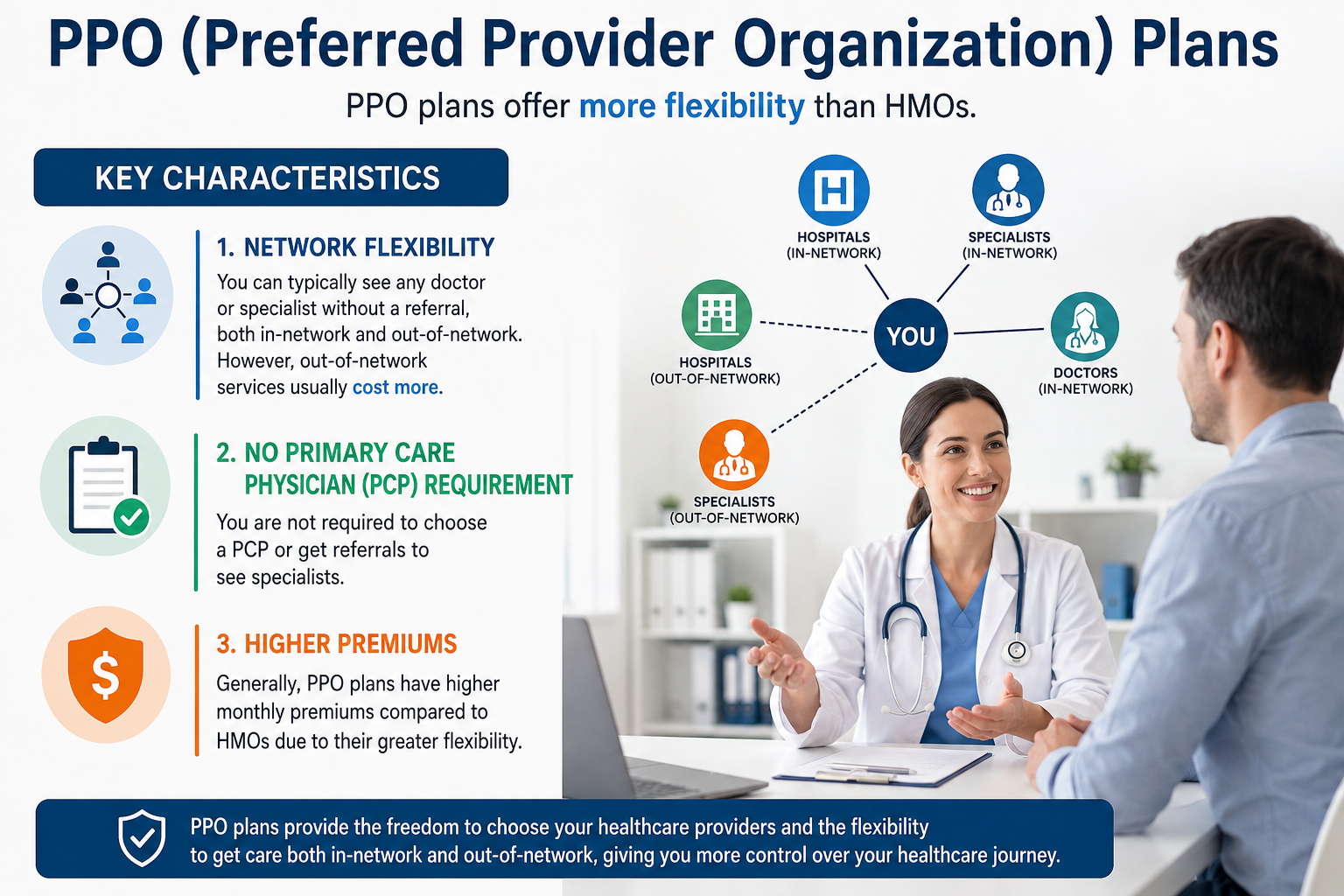
HMO (Health Maintenance Organization) Plans
HMO plans typically have lower premiums but come with more restrictions:
- PCP Requirement: You must choose a primary care physician (PCP) within the plan’s network. Your PCP manages your care and provides referrals to specialists.
- In-Network Care: Except for emergencies, services are generally covered only if you use doctors, hospitals, and other providers within the HMO’s network.
- Lower Out-of-Pocket Costs: HMOs often have lower deductibles and copayments.
The choice between PPO vs HMO health insurance often comes down to a trade-off between flexibility and cost.
Identifying Top-Rated Health Insurance Companies
When seeking the best health insurance companies, it’s important to evaluate providers based on objective criteria rather than just brand recognition. Identifying top-rated health insurance companies involves looking at their financial stability, customer satisfaction, network breadth, and plan variety. Consulting various health insurance reviews can provide valuable insights into real-world experiences.
Key Metrics for Evaluating Providers
Several independent organizations assess health insurance companies. Key metrics to consider include:
- AM Best Ratings: These ratings assess an insurer’s financial strength and ability to meet its policyholder obligations. Higher ratings indicate greater financial stability.
- NCQA Accreditation: The National Committee for Quality Assurance (NCQA) evaluates health plans on quality of care and service. Accreditation signifies a commitment to high standards.
- Consumer Complaint Ratios: State insurance departments and organizations like the National Association of Insurance Commissioners (NAIC) publish complaint data, offering insight into customer satisfaction and service issues.
- J.D. Power Rankings: These rankings often reflect customer satisfaction with various aspects of health insurance plans, including coverage, cost, and communication.
Customer Service and Support
Beyond financial stability and quality metrics, the quality of customer service is paramount. Consider:
- Responsiveness: How easily can you reach customer support? Are inquiries resolved efficiently?
- Ease of Claims Processing: A smooth and transparent claims process is crucial. Look for companies with a reputation for fair and timely claim handling.
- Digital Tools: Many providers offer online portals, mobile apps, and telehealth services. These digital resources can significantly enhance convenience and access to care.
Finding Affordable Health Insurance Plans and Individual Options
Securing affordable health insurance plans is a primary concern for many. Fortunately, several avenues exist to help individuals and families obtain coverage, including the health insurance marketplace and various financial assistance programs. Exploring individual health insurance options is particularly relevant for those not covered by an employer.
Utilizing the Health Insurance Marketplace
The Health Insurance Marketplace (healthcare.gov) is a key resource for individuals and families to compare and enroll in health plans. It offers:
- Open Enrollment: A specific period each year (typically November 1 to January 15 in most states) when individuals can sign up for, re-enroll in, or change health insurance plans.
- Special Enrollment Periods: Outside of open enrollment, you may qualify for a Special Enrollment Period if you experience certain life events, such as marriage, birth of a child, loss of other coverage, or moving to a new area.
- Plan Comparison: The Marketplace allows you to compare various plans side-by-side based on cost, benefits, and provider networks.
Exploring Subsidies and Financial Assistance
To make coverage more accessible, the government offers financial assistance through the Marketplace:
- Premium Tax Credits: These reduce your monthly premium payments. Eligibility is based on household income and family size.
- Cost-Sharing Reductions (CSRs): These lower your out-of-pocket costs, such as deductibles, copayments, and coinsurance. CSRs are available only with Silver plans purchased through the Marketplace.
Medicaid and the Children’s Health Insurance Program (CHIP) also provide low-cost or free health coverage to eligible low-income individuals, families, and children.
How to Compare Health Insurance Providers Effectively
Once you have a clear understanding of your needs and the types of plans available, the next step is to compare health insurance providers directly. This involves a detailed review of plan documents, network specifics, and policy limitations to ensure you select the best fit.
Reviewing Summary of Benefits and Coverage (SBC)
Every health plan must provide a Summary of Benefits and Coverage (SBC). This standardized document allows for easy comparison of plans. When reviewing an SBC, pay attention to:
- Covered Services: What medical services are included (e.g., doctor visits, hospital stays, prescription drugs, mental health services)?
- Cost-Sharing: Clearly understand the deductible, copayments, coinsurance, and out-of-pocket maximums.
- Exclusions: What services are specifically not covered by the plan?
- Examples of Coverage: SBCs often include examples of how the plan would cover common medical scenarios, such as managing diabetes or having a baby.
Verifying Provider Networks and Prescription Coverage
Before committing to a plan, always verify that your preferred healthcare providers and essential medications are covered:
- Provider Network: Use the insurer’s online tool or contact them directly to confirm that your doctors, specialists, and hospitals are in-network. This is especially critical for PPO vs HMO health insurance plans.
- Prescription Drug Formulary: Check the plan’s formulary (list of covered drugs) to ensure your current prescriptions are included and understand their cost tier.
Frequently Asked Questions About Health Insurance
What is the difference between a deductible and an out-of-pocket maximum?
A deductible is the amount you must pay for covered healthcare services before your insurance plan begins to pay. For example, if your deductible is $2,000, you pay the first $2,000 of covered medical expenses yourself. The out-of-pocket maximum is the absolute most you will have to pay for covered services in a plan year. Once you reach this limit, your health plan pays 100% of the costs for covered benefits for the remainder of the year, regardless of whether you’ve met your deductible.
Can I change my health insurance plan outside of open enrollment?
Generally, you can only change your health insurance plan outside of the annual Open Enrollment Period if you qualify for a Special Enrollment Period (SEP). SEPs are triggered by certain qualifying life events, such as getting married, having a baby, losing other health coverage, or moving to a new area. These events typically grant you a 60-day window to enroll in a new plan.
Are dental and vision typically included in health insurance plans?
Standard health insurance plans primarily cover medical care. While some plans may offer limited dental or vision benefits, especially for children, comprehensive dental and vision coverage is usually purchased separately as standalone plans. It’s important to review the specific benefits of any health plan to understand what is included.
Making an Informed Decision for Your Health Coverage
Choosing the right health insurance plan requires careful consideration of your personal health needs, financial situation, and the various options available. By understanding the distinctions between plan types like PPO vs HMO health insurance, utilizing resources like the health insurance marketplace, and diligently comparing health insurance coverage options, you can confidently select a plan. Thorough research and a clear understanding of your priorities are key to identifying the best health insurance companies and securing coverage that provides peace of mind and access to quality care.
ADDED E-E-A-T CONTENT
Comparing Total Annual Costs, Not Just Monthly Premiums
When comparing affordable health insurance plans, looking only at the monthly premium can give you an incomplete picture of what a plan may cost. A more useful comparison considers the premium together with the deductible, copayments, coinsurance, and out-of-pocket maximum.
For example, suppose Plan A has a lower monthly premium but a substantially higher deductible, while Plan B costs more each month but has lower cost-sharing when you receive medical care. Someone who rarely uses healthcare may prefer the lower premium, while someone expecting regular specialist visits, expensive prescriptions, or a planned procedure may place more value on predictable out-of-pocket costs.
A practical comparison should consider low, moderate, and high healthcare-use scenarios rather than choosing solely on the advertised premium.
Understanding Bronze, Silver, Gold, and Platinum Health Plans
Marketplace health insurance can also be organized into Bronze, Silver, Gold, and Platinum metal categories. These categories describe how consumers and the plan generally share the costs of covered care; they do not indicate the quality of medical care. A plan’s network type, such as HMO or PPO, is a separate consideration.
When comparing plans, consider the metal level together with the plan’s premium, deductible, provider network, prescription coverage, and expected healthcare usage.
EPO, POS, and HDHP Plans: What to Check
Other plan types can also affect how you access care. EPO plans generally require you to use the plan’s network except for emergencies. POS plans combine features of HMO and PPO plans and may require a referral for specialist care. HDHPs have higher deductibles and may be paired with a Health Savings Account when the plan meets applicable requirements.
Before selecting any plan type, check the actual plan documents rather than assuming that every plan with the same label has identical rules. Network restrictions, referral requirements, deductibles, and cost-sharing can vary from one plan to another.
Look Beyond Ratings When Choosing the Best Health Insurance Companies
A strong company rating does not automatically mean a particular plan is the best choice for every consumer. Provider availability, prescription coverage, premiums, deductibles, customer service, and plan-specific rules can have a greater practical impact on your experience.
When evaluating the best health insurance companies, compare the actual plans available in your area rather than judging an insurer solely by its national reputation. Two plans from the same company can have different provider networks, cost-sharing structures, formularies, and benefits.
Check Eligibility Before Assuming You Need to Pay Full Price
Before selecting a plan based only on its advertised premium, check whether you qualify for Marketplace savings or another public coverage program. Eligibility and enrollment rules can change, so consumers should verify current requirements and deadlines through official government resources before making an enrollment decision.
How to Read an SBC Like an Insurance Expert
The Summary of Benefits and Coverage (SBC) provides a standardized way to understand and compare important plan features and costs.
When comparing two SBCs, look at the same categories side by side: deductible, out-of-pocket limit, office visits, hospital services, prescription drugs, exclusions and limitations, and coverage examples.
An expert comparison should move from the summary document to the full plan documents when an important benefit, exclusion, limitation, or eligibility rule needs clarification.
Verify the Network Twice Before Enrollment
Provider directories can contain inaccurate or outdated information, so checking a directory alone may not always be enough. For important providers, confirm network status with the insurer and, when possible, with the provider’s office.
Check that your primary-care physician, specialists, preferred hospital, treatment facilities, and important prescriptions are covered by the specific plan you are considering.
Understand Prior Authorization, Referrals, and Coverage Limits
A plan may cover a particular treatment but still require certain administrative steps before the treatment is provided. Depending on the plan, you may encounter referral requirements, prior authorization, quantity limits, or other utilization-management rules.
Before scheduling an expensive procedure or starting a long-term medication, ask the insurer and healthcare provider whether approval is required, who is responsible for obtaining it, and what documentation may be needed.
What to Do When a Health Insurance Claim Is Denied
If a claim is denied, review the explanation of benefits and the plan documents to understand why the claim was not paid. Keep copies of bills, explanations of benefits, authorization information, correspondence, and other relevant records.
If you believe a claim was incorrectly denied, follow the plan’s stated internal appeal process and applicable deadlines. Depending on the type of coverage and the issue involved, additional review or external appeal rights may be available.
A useful habit is to compare the provider’s bill with the explanation of benefits rather than assuming the amount billed is the amount you owe.
Health Insurance Comparison Checklist
- [ ] Calculate the annual premium.
- [ ] Compare deductibles for individual and family coverage where applicable.
- [ ] Compare copayments and coinsurance.
- [ ] Check the out-of-pocket maximum.
- [ ] Confirm your preferred doctors are in-network.
- [ ] Confirm your preferred hospitals and treatment facilities are in-network.
- [ ] Review prescription coverage and medication tiers.
- [ ] Check referral and prior-authorization requirements.
- [ ] Review exclusions and limitations.
- [ ] Check whether you qualify for Marketplace savings, Medicaid, or CHIP.
- [ ] Read the SBC and consult the complete plan documents when necessary.
- [ ] Compare likely total annual costs rather than choosing solely by monthly premium.
Does the Out-of-Pocket Maximum Include My Monthly Premium?
Generally, no. The out-of-pocket maximum applies to covered services subject to the plan’s out-of-pocket rules and does not include monthly premiums. It also generally does not include amounts for services the plan does not cover or certain out-of-network expenses.
What Should I Check Before Choosing the Best Health Insurance Company?
Start with the plan rather than the company name. Compare the provider network, prescription formulary, premium, deductible, copayments, coinsurance, out-of-pocket maximum, exclusions, referral requirements, and customer-service options. A company can have a strong overall reputation while a particular plan may not meet your healthcare or financial needs.
How Can I Compare Two Health Insurance Plans?
Use each plan’s SBC and compare equivalent categories side by side. Start with annual premiums and expected healthcare usage, then compare deductibles, cost-sharing, out-of-pocket limits, provider networks, prescriptions, exclusions, and authorization requirements.
What If My Doctor Appears in the Insurer’s Online Directory but Says They Do Not Accept the Plan?
Ask the insurer to confirm the provider’s network status for the specific plan and, when possible, for the specific location where you will receive care. Provider directories are not always accurate, so contacting the insurer can be important when network status is uncertain.
Can I Get Protection From Unexpected Out-of-Network Bills?
Federal No Surprises Act protections apply in certain circumstances, including some emergency services and certain out-of-network services received at in-network facilities. The exact protections and exceptions depend on the situation and type of coverage.Selecting appropriate health insurance coverage is a critical financial and health decision. With numerous providers and plan types available, identifying the best health insurance companies can be a complex task. This guide aims to simplify the process by outlining key considerations, explaining different plan structures, and offering strategies to help you make an informed choice that aligns with your specific needs and budget.
Understanding Your Needs: How to Choose Health Insurance
Before evaluating specific providers best health insurance companies, it is essential to understand your own healthcare requirements. The process of determining how to choose health insurance begins with a thorough assessment of your current health status, financial situation, and future medical expectations. This foundational step ensures that any plan you consider will genuinely serve your needs, whether you are seeking health insurance for individuals or comprehensive health insurance for families.
Assessing Your Healthcare Requirements
Begin by reviewing your past year’s medical expenses and anticipating future needs. Consider factors such as:
- Current Health Status: Do you have any chronic conditions requiring ongoing treatment or medication?
- Prescription Medications: List all prescriptions you or your family members regularly take. Check if these are covered by prospective plans.
- Specialist Visits: Do you regularly see specialists (e.g., dermatologists, cardiologists, therapists)? Ensure these specialists are in a plan’s network.
- Anticipated Medical Procedures: Are you planning for surgery, pregnancy, or other significant medical events in the near future?
- Preferred Doctors and Hospitals: Verify if your current healthcare providers are part of the plan’s network.
These considerations are vital for both health insurance for individuals and health insurance for families, as family needs can vary widely.
Budgeting for Health Insurance Premiums and Out-of-Pocket Costs
Understanding the financial components of health insurance is crucial for finding affordable health insurance plans. Beyond the monthly premium, you must account for potential out-of-pocket expenses:
- Premiums: The fixed amount you pay monthly to maintain coverage.
- Deductible: The amount you must pay for covered healthcare services before your insurance plan starts to pay.
- Copayment (Copay): A fixed amount you pay for a covered healthcare service after you’ve paid your deductible.
- Coinsurance: Your share of the cost for a covered healthcare service, calculated as a percentage of the allowed amount for the service.
- Out-of-Pocket Maximum: The most you have to pay for covered services in a plan year. Once you reach this amount, your health plan pays 100% of the costs for covered benefits.
Balancing these costs against your budget is key to securing truly affordable health insurance plans.
Exploring Health Insurance Coverage Options: PPO vs. HMO and More
Understanding the different types of plans available is fundamental to selecting appropriate health insurance coverage options. The most common types include PPO and HMO, but others like EPO, POS, and HDHP also offer distinct features.
PPO (Preferred Provider Organization) Plans
PPO plans offer more flexibility than HMOs. Key characteristics include:
- Network Flexibility: You can typically see any doctor or specialist without a referral, both in-network and out-of-network. However, out-of-network services usually cost more.
- No Primary Care Physician (PCP) Requirement: You are not required to choose a PCP or get referrals to see specialists.
- Higher Premiums: Generally, PPO plans have higher monthly premiums compared to HMOs due to their greater flexibility.
Many individuals and families prefer PPO plans for their broader choice of providers.
HMO (Health Maintenance Organization) Plans
HMO plans typically have lower premiums but come with more restrictions:
- PCP Requirement: You must choose a primary care physician (PCP) within the plan’s network. Your PCP manages your care and provides referrals to specialists.
- In-Network Care: Except for emergencies, services are generally covered only if you use doctors, hospitals, and other providers within the HMO’s network.
- Lower Out-of-Pocket Costs: HMOs often have lower deductibles and copayments.
The choice between PPO vs HMO health insurance often comes down to a trade-off between flexibility and cost.
Identifying Top-Rated Health Insurance Companies
When seeking the best health insurance companies, it’s important to evaluate providers based on objective criteria rather than just brand recognition. Identifying top-rated health insurance companies involves looking at their financial stability, customer satisfaction, network breadth, and plan variety. Consulting various health insurance reviews can provide valuable insights into real-world experiences.
Key Metrics for Evaluating Providers
Several independent organizations assess health insurance companies. Key metrics to consider include:
- AM Best Ratings: These ratings assess an insurer’s financial strength and ability to meet its policyholder obligations. Higher ratings indicate greater financial stability.
- NCQA Accreditation: The National Committee for Quality Assurance (NCQA) evaluates health plans on quality of care and service. Accreditation signifies a commitment to high standards.
- Consumer Complaint Ratios: State insurance departments and organizations like the National Association of Insurance Commissioners (NAIC) publish complaint data, offering insight into customer satisfaction and service issues.
- J.D. Power Rankings: These rankings often reflect customer satisfaction with various aspects of health insurance plans, including coverage, cost, and communication.
Customer Service and Support
Beyond financial stability and quality metrics, the quality of customer service is paramount. Consider:
- Responsiveness: How easily can you reach customer support? Are inquiries resolved efficiently?
- Ease of Claims Processing: A smooth and transparent claims process is crucial. Look for companies with a reputation for fair and timely claim handling.
- Digital Tools: Many providers offer online portals, mobile apps, and telehealth services. These digital resources can significantly enhance convenience and access to care.
Finding Affordable Health Insurance Plans and Individual Options
Securing affordable health insurance plans is a primary concern for many. Fortunately, several avenues exist to help individuals and families obtain coverage, including the health insurance marketplace and various financial assistance programs. Exploring individual health insurance options is particularly relevant for those not covered by an employer.
Utilizing the Health Insurance Marketplace
The Health Insurance Marketplace (healthcare.gov) is a key resource for individuals and families to compare and enroll in health plans. It offers:
- Open Enrollment: A specific period each year (typically November 1 to January 15 in most states) when individuals can sign up for, re-enroll in, or change health insurance plans.
- Special Enrollment Periods: Outside of open enrollment, you may qualify for a Special Enrollment Period if you experience certain life events, such as marriage, birth of a child, loss of other coverage, or moving to a new area.
- Plan Comparison: The Marketplace allows you to compare various plans side-by-side based on cost, benefits, and provider networks.
Exploring Subsidies and Financial Assistance
To make coverage more accessible, the government offers financial assistance through the Marketplace:
- Premium Tax Credits: These reduce your monthly premium payments. Eligibility is based on household income and family size.
- Cost-Sharing Reductions (CSRs): These lower your out-of-pocket costs, such as deductibles, copayments, and coinsurance. CSRs are available only with Silver plans purchased through the Marketplace.
Medicaid and the Children’s Health Insurance Program (CHIP) also provide low-cost or free health coverage to eligible low-income individuals, families, and children.
How to Compare Health Insurance Providers Effectively
Once you have a clear understanding of your needs and the types of plans available, the next step is to compare health insurance providers directly. This involves a detailed review of plan documents, network specifics, and policy limitations to ensure you select the best fit.
Reviewing Summary of Benefits and Coverage (SBC)
Every health plan must provide a Summary of Benefits and Coverage (SBC). This standardized document allows for easy comparison of plans. When reviewing an SBC, pay attention to:
- Covered Services: What medical services are included (e.g., doctor visits, hospital stays, prescription drugs, mental health services)?
- Cost-Sharing: Clearly understand the deductible, copayments, coinsurance, and out-of-pocket maximums.
- Exclusions: What services are specifically not covered by the plan?
- Examples of Coverage: SBCs often include examples of how the plan would cover common medical scenarios, such as managing diabetes or having a baby.
Verifying Provider Networks and Prescription Coverage
Before committing to a plan, always verify that your preferred healthcare providers and essential medications are covered:
- Provider Network: Use the insurer’s online tool or contact them directly to confirm that your doctors, specialists, and hospitals are in-network. This is especially critical for PPO vs HMO health insurance plans.
- Prescription Drug Formulary: Check the plan’s formulary (list of covered drugs) to ensure your current prescriptions are included and understand their cost tier.
Frequently Asked Questions About Health Insurance
What is the difference between a deductible and an out-of-pocket maximum?
A deductible is the amount you must pay for covered healthcare services before your insurance plan begins to pay. For example, if your deductible is $2,000, you pay the first $2,000 of covered medical expenses yourself. The out-of-pocket maximum is the absolute most you will have to pay for covered services in a plan year. Once you reach this limit, your health plan pays 100% of the costs for covered benefits for the remainder of the year, regardless of whether you’ve met your deductible.
Can I change my health insurance plan outside of open enrollment?
Generally, you can only change your health insurance plan outside of the annual Open Enrollment Period if you qualify for a Special Enrollment Period (SEP). SEPs are triggered by certain qualifying life events, such as getting married, having a baby, losing other health coverage, or moving to a new area. These events typically grant you a 60-day window to enroll in a new plan.
Are dental and vision typically included in health insurance plans?
Standard health insurance plans primarily cover medical care. While some plans may offer limited dental or vision benefits, especially for children, comprehensive dental and vision coverage is usually purchased separately as standalone plans. It’s important to review the specific benefits of any health plan to understand what is included.
Making an Informed Decision for Your Health Coverage
Choosing the right health insurance plan requires careful consideration of your personal health needs, financial situation, and the various options available. By understanding the distinctions between plan types like PPO vs HMO health insurance, utilizing resources like the health insurance marketplace, and diligently comparing health insurance coverage options, you can confidently select a plan. Thorough research and a clear understanding of your priorities are key to identifying the best health insurance companies and securing coverage that provides peace of mind and access to quality care.
ADDED E-E-A-T CONTENT
Comparing Total Annual Costs, Not Just Monthly Premiums
When comparing affordable health insurance plans, looking only at the monthly premium can give you an incomplete picture of what a plan may cost. A more useful comparison considers the premium together with the deductible, copayments, coinsurance, and out-of-pocket maximum.
For example, suppose Plan A has a lower monthly premium but a substantially higher deductible, while Plan B costs more each month but has lower cost-sharing when you receive medical care. Someone who rarely uses healthcare may prefer the lower premium, while someone expecting regular specialist visits, expensive prescriptions, or a planned procedure may place more value on predictable out-of-pocket costs.
A practical comparison should consider low, moderate, and high healthcare-use scenarios rather than choosing solely on the advertised premium.
Understanding Bronze, Silver, Gold, and Platinum Health Plans
Marketplace health insurance can also be organized into Bronze, Silver, Gold, and Platinum metal categories. These categories describe how consumers and the plan generally share the costs of covered care; they do not indicate the quality of medical care. A plan’s network type, such as HMO or PPO, is a separate consideration.
When comparing plans, consider the metal level together with the plan’s premium, deductible, provider network, prescription coverage, and expected healthcare usage.
EPO, POS, and HDHP Plans: What to Check
Other plan types can also affect how you access care. EPO plans generally require you to use the plan’s network except for emergencies. POS plans combine features of HMO and PPO plans and may require a referral for specialist care. HDHPs have higher deductibles and may be paired with a Health Savings Account when the plan meets applicable requirements.
Before selecting any plan type, check the actual plan documents rather than assuming that every plan with the same label has identical rules. Network restrictions, referral requirements, deductibles, and cost-sharing can vary from one plan to another.
Look Beyond Ratings When Choosing the Best Health Insurance Companies
A strong company rating does not automatically mean a particular plan is the best choice for every consumer. Provider availability, prescription coverage, premiums, deductibles, customer service, and plan-specific rules can have a greater practical impact on your experience.
When evaluating the best health insurance companies, compare the actual plans available in your area rather than judging an insurer solely by its national reputation. Two plans from the same company can have different provider networks, cost-sharing structures, formularies, and benefits.
Check Eligibility Before Assuming You Need to Pay Full Price
Before selecting a plan based only on its advertised premium, check whether you qualify for Marketplace savings or another public coverage program. Eligibility and enrollment rules can change, so consumers should verify current requirements and deadlines through official government resources before making an enrollment decision.
How to Read an SBC Like an Insurance Expert
The Summary of Benefits and Coverage (SBC) provides a standardized way to understand and compare important plan features and costs.
When comparing two SBCs, look at the same categories side by side: deductible, out-of-pocket limit, office visits, hospital services, prescription drugs, exclusions and limitations, and coverage examples.
An expert comparison should move from the summary document to the full plan documents when an important benefit, exclusion, limitation, or eligibility rule needs clarification.
Verify the Network Twice Before Enrollment
Provider directories can contain inaccurate or outdated information, so checking a directory alone may not always be enough. For important providers, confirm network status with the insurer and, when possible, with the provider’s office.
Check that your primary-care physician, specialists, preferred hospital, treatment facilities, and important prescriptions are covered by the specific plan you are considering.
Understand Prior Authorization, Referrals, and Coverage Limits
A plan may cover a particular treatment but still require certain administrative steps before the treatment is provided. Depending on the plan, you may encounter referral requirements, prior authorization, quantity limits, or other utilization-management rules.
Before scheduling an expensive procedure or starting a long-term medication, ask the insurer and healthcare provider whether approval is required, who is responsible for obtaining it, and what documentation may be needed.
What to Do When a Health Insurance Claim Is Denied
If a claim is denied, review the explanation of benefits and the plan documents to understand why the claim was not paid. Keep copies of bills, explanations of benefits, authorization information, correspondence, and other relevant records.
If you believe a claim was incorrectly denied, follow the plan’s stated internal appeal process and applicable deadlines. Depending on the type of coverage and the issue involved, additional review or external appeal rights may be available.
A useful habit is to compare the provider’s bill with the explanation of benefits rather than assuming the amount billed is the amount you owe.
Health Insurance Comparison Checklist
- [ ] Calculate the annual premium.
- [ ] Compare deductibles for individual and family coverage where applicable.
- [ ] Compare copayments and coinsurance.
- [ ] Check the out-of-pocket maximum.
- [ ] Confirm your preferred doctors are in-network.
- [ ] Confirm your preferred hospitals and treatment facilities are in-network.
- [ ] Review prescription coverage and medication tiers.
- [ ] Check referral and prior-authorization requirements.
- [ ] Review exclusions and limitations.
- [ ] Check whether you qualify for Marketplace savings, Medicaid, or CHIP.
- [ ] Read the SBC and consult the complete plan documents when necessary.
- [ ] Compare likely total annual costs rather than choosing solely by monthly premium.
Does the Out-of-Pocket Maximum Include My Monthly Premium?
Generally, no. The out-of-pocket maximum applies to covered services subject to the plan’s out-of-pocket rules and does not include monthly premiums. It also generally does not include amounts for services the plan does not cover or certain out-of-network expenses.
What Should I Check Before Choosing the Best Health Insurance Company?
Start with the plan rather than the company name. Compare the provider network, prescription formulary, premium, deductible, copayments, coinsurance, out-of-pocket maximum, exclusions, referral requirements, and customer-service options. A company can have a strong overall reputation while a particular plan may not meet your healthcare or financial needs.
How Can I Compare Two Health Insurance Plans?
Use each plan’s SBC and compare equivalent categories side by side. Start with annual premiums and expected healthcare usage, then compare deductibles, cost-sharing, out-of-pocket limits, provider networks, prescriptions, exclusions, and authorization requirements.
What If My Doctor Appears in the Insurer’s Online Directory but Says They Do Not Accept the Plan?
Ask the insurer to confirm the provider’s network status for the specific plan and, when possible, for the specific location where you will receive care. Provider directories are not always accurate, so contacting the insurer can be important when network status is uncertain.
Can I Get Protection From Unexpected Out-of-Network Bills?
Federal No Surprises Act protections apply in certain circumstances, including some emergency services and certain out-of-network services received at in-network facilities. The exact protections and exceptions depend on the situation and type of coverage.